

Stepper Motor FAQ – Heating
- Why do stepper motors heat up?
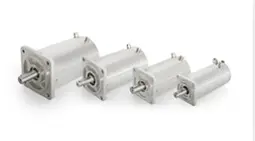
Most motors we commonly see contain an iron core and winding coils. The windings have resistance, and energizing them produces losses. The magnitude of these losses is proportional to the resistance and the square of the current – this is what we call copper loss. If the current is not standard DC or a pure sine wave, harmonic losses also occur. The iron core exhibits hysteresis and eddy current effects, which generate losses in an alternating magnetic field. The magnitude of these losses depends on the material, current, frequency, and voltage – this is called iron loss. Both copper loss and iron loss manifest as heat, thereby affecting motor efficiency. Stepper motors generally prioritize positioning accuracy and torque output, so their efficiency is relatively low, currents are typically high, harmonic content is significant, and the frequency of the alternating current changes with speed. Consequently, stepper motors commonly experience heating, often more severe than that of ordinary AC motors. This behavior also applies to specialized types such as vacuum stepper motors, high vacuum stepper motors, and ultra-high vacuum stepper motors, where thermal management becomes even more critical due to the lack of convective cooling.
- Why do high-low temperature stepper motors and servo motors run hotter than ordinary motors?
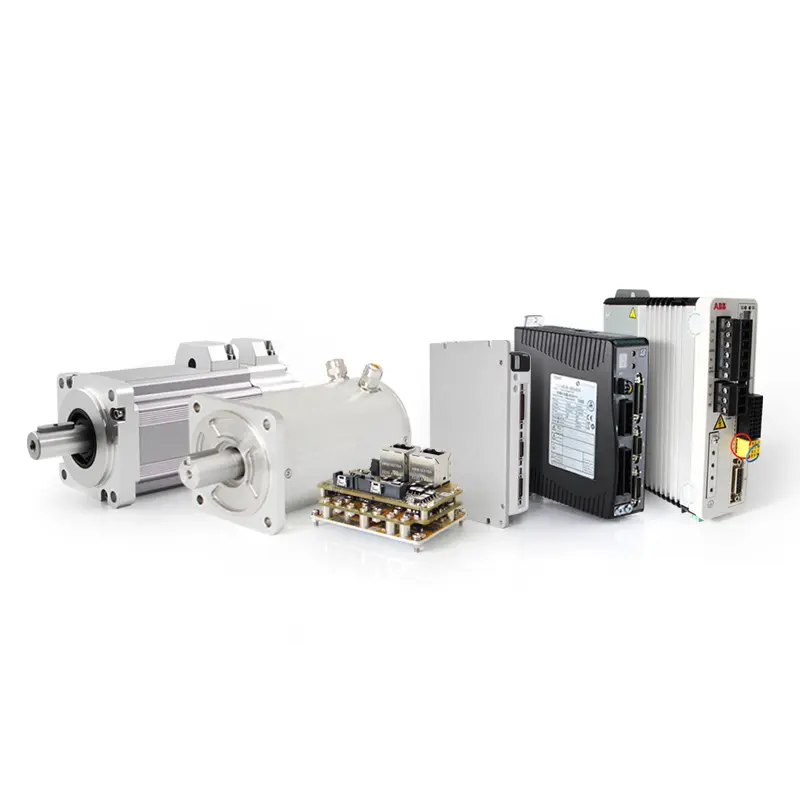
Motors designed for high-low temperature operation use coil materials that withstand higher temperatures and have higher insulation strength. As a result, their heat dissipation capability is somewhat lower than that of ordinary servo motor windings, but this does not affect the motor's high-temperature performance. For applications involving clean vacuum stepper motors, clean vacuum motors, or semiconductor equipment vacuum motors, this characteristic is already taken into account during design. Similarly, vacuum servo motors and high vacuum servo motors may exhibit slightly higher temperatures under identical conditions due to their specialized construction.
- How does stepper motor heating vary with speed?
When constant-current drive technology is used, the current in a stepper motor remains constant at standstill and low speeds to maintain constant torque output. As speed increases to a certain point, the back EMF inside the motor rises, the current gradually decreases, and torque also drops. Therefore, the heating caused by copper loss is speed-dependent. Heating is generally higher at standstill and low speeds, and lower at high speeds. However, iron loss (although it accounts for a smaller proportion) does not follow the same trend. The total heating of the motor is the sum of both, so the above description is only a general guideline. For low outgassing stepper motors used in ultra-clean environments, careful speed selection can help manage both heating and outgassing rates.
- Effects of heating
Although motor heating generally does not affect motor life and most customers need not be overly concerned, severe heating can have some negative effects. For example, differences in thermal expansion coefficients among internal parts can cause structural stress and slight changes in the internal air gap, which may affect the motor's dynamic response and make it more prone to step loss at high speeds. In some applications, excessive motor heating is not permissible – such as in medical devices and high-precision test equipment. Therefore, motor heating should be properly controlled. This is especially important for high temperature vacuum motors, radiation resistant vacuum motors, and low temperature vacuum motors, where extreme operating conditions already push material limits.
- How to reduce motor heating
Reducing heating means reducing copper loss and iron loss.
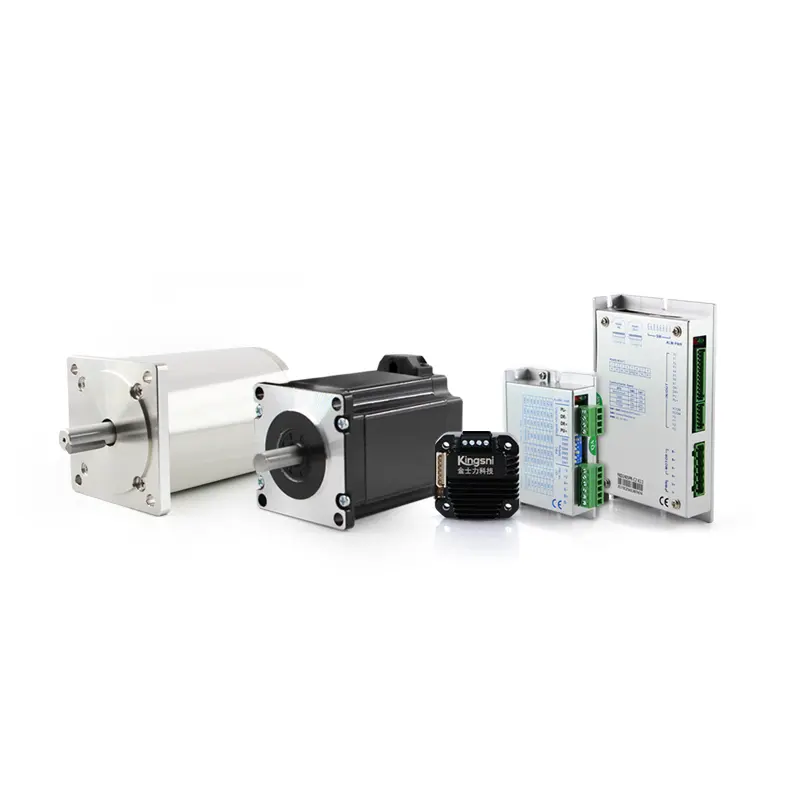
To reduce copper loss, there are two approaches: lower resistance and lower current. When selecting a motor, choose one with low resistance and low rated current if possible. For two-phase motors, prefer series connection over parallel connection. However, these choices often conflict with requirements for high torque and high speed. For an already selected motor, make full use of the driver's automatic half-current control and offline functions. The former automatically reduces current when the motor is stationary, while the latter cuts off current entirely. In addition, microvstepping drives produce current waveforms closer to a sine wave with fewer harmonics, resulting in less motor heating.
There are fewer ways to reduce iron loss. Voltage level is related: high-voltage driving improves high-speed characteristics but also increases heating. Therefore, choose an appropriate drive voltage level that balances high-speed performance, smooth operation, heating, noise, and other criteria. For specialized applications such as clean vacuum stepper motors in semiconductor fabs or low outgassing stepper motors in vacuum deposition systems, these trade-offs become even more critical.