


How to Choose the Microstep Resolution of a Stepper Drive? – Professional Insights from Kingsni Technology
In a stepper motor control system, the microstep resolution (also known as step subdivision) of the drive is a critical parameter. The higher the microstep resolution, the smoother the motor runs and the higher the positioning accuracy. But how do you select the optimal microstep resolution in practice? Kingsni Technology, backed by years of experience in extreme‑environment motion control, offers practical recommendations.
Recommended Microstep Resolution: 4000 or 10000
Extensive testing has shown that for most industrial applications, setting the stepper drive’s microstep resolution to 4000 or 10000 delivers outstanding performance.
Reason 1: Higher Torque at High Speeds
At the same motor speed, selecting 10000 microsteps results in significantly higher output torque compared to selecting 1000 microsteps. This means that in high‑speed scenarios, a higher microstep resolution preserves more torque margin, effectively prevents missed steps, and improves equipment stability and processing efficiency.
Reason 2: Smoother Low‑Speed Operation
Many users report that when the microstep resolution is as low as 1000, the motor exhibits strong vibration and very low torque at low speeds (e.g., below 10 rpm), making operation impossible. Increasing the resolution to 10000 dramatically reduces low‑speed vibration while providing sufficient torque to meet load demands. This is especially important for precision positioning or low‑speed creeping applications such as semiconductor inspection and biomedical sampling.
Constraint: Maximum Pulse Frequency of the PLC
The microstep resolution cannot be increased indefinitely. It is limited by the maximum output pulse frequency of the host controller (e.g., a PLC). The input pulse frequency required by the stepper drive equals motor speed (revolutions per second) × microstep resolution. For a given maximum motor speed, a higher microstep resolution demands a higher pulse frequency. If the PLC cannot provide the required frequency, the resolution must be lowered. Therefore, choosing 4000 or 10000 strikes a good balance between performance and compatibility.
Kingsni Technology – Your Expert in Extreme‑Environment Stepper Drives
As a company deeply rooted in specialized motion control for harsh environments, Kingsni Technology (Kingsni) offers a full range of stepper drives designed for vacuum, high/low temperature, and radiation‑prone applications. Our drives support common microstep resolutions such as 4000 and 10000, and are compatible with pulse/direction, RS485 (Modbus RTU), EtherCAT, and CANopen communication interfaces. They operate reliably over a temperature range of -40°C to +70°C.
Whether you need solutions for semiconductor manufacturing, space simulation, nuclear equipment, or general automation, Kingsni provides the most suitable stepper drive for your application.
Our product portfolio includes:
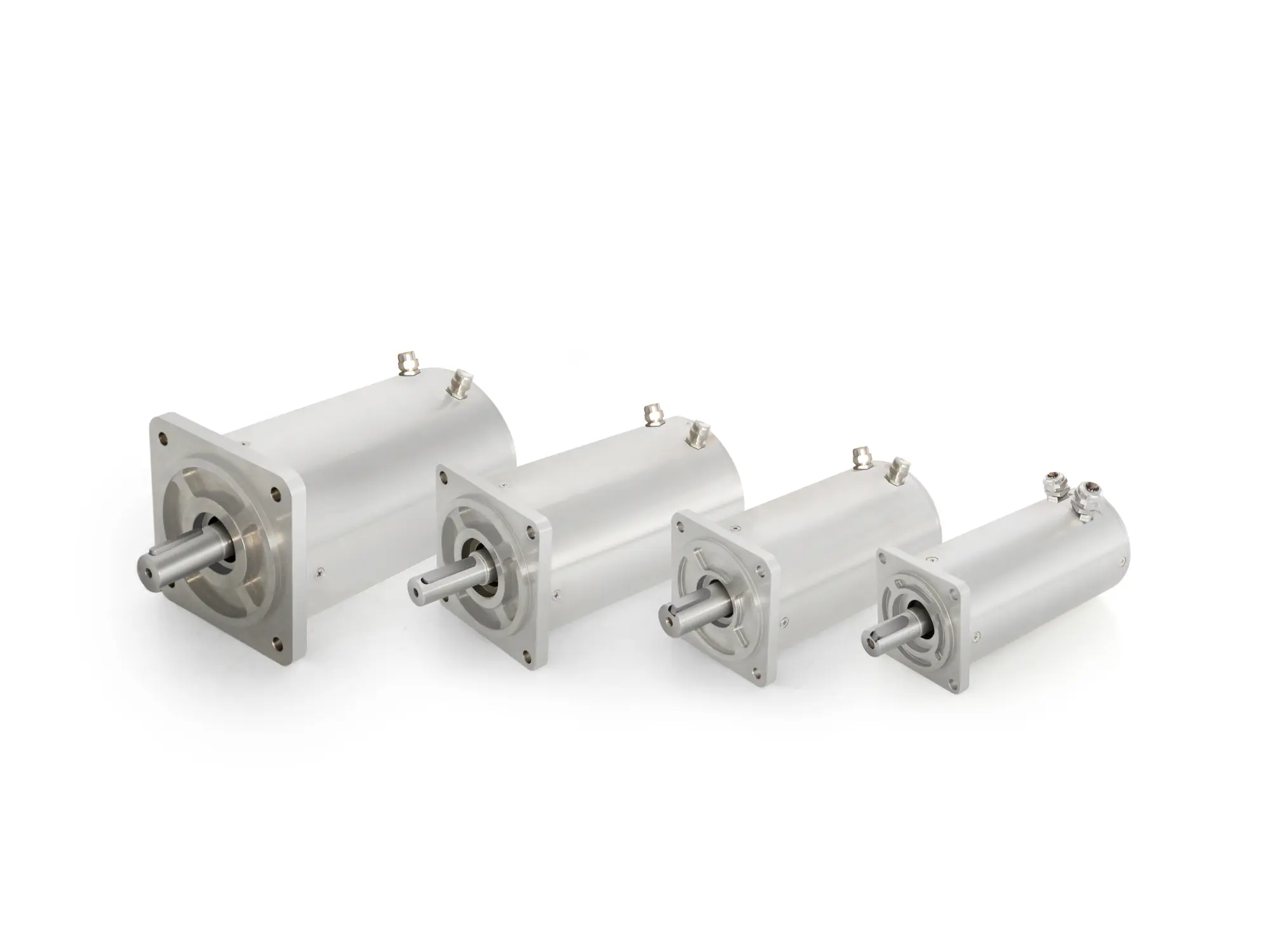
Vacuum stepper motors
In-vacuum stepper motors
Low temperature stepper motors
Cryogenic stepper motors
High temperature stepper motors
Ultra high temperature stepper motors
Radiation resistant stepper motors
Radiation hardened stepper motors
High/low temperature servo motors
High/low temperature stepper motors
Kingsni Technology – Making Every Step Precise and Reliable