
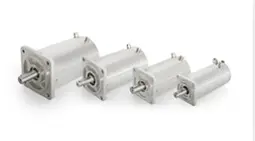

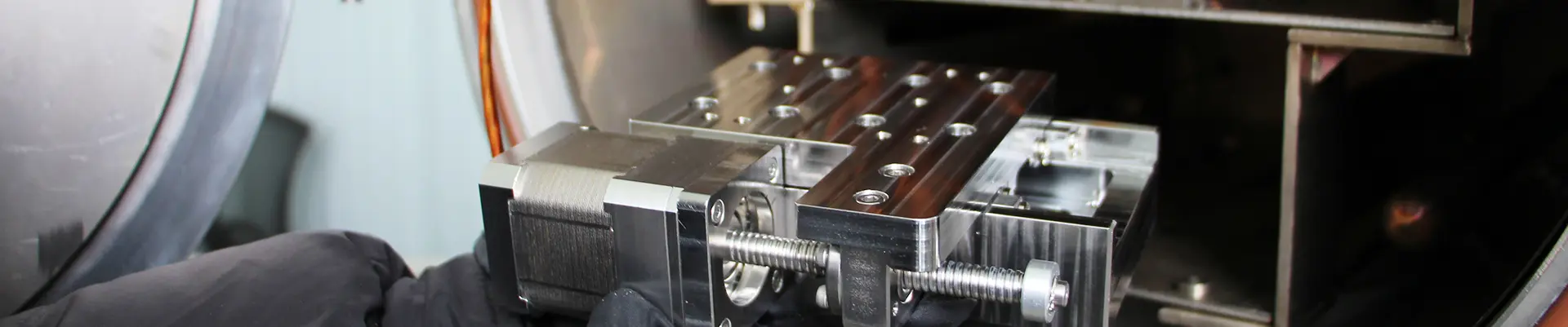
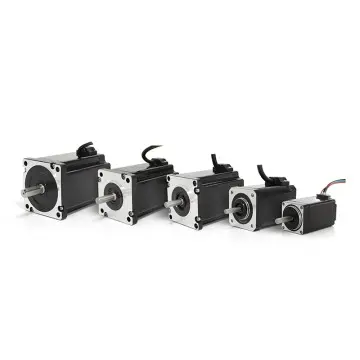
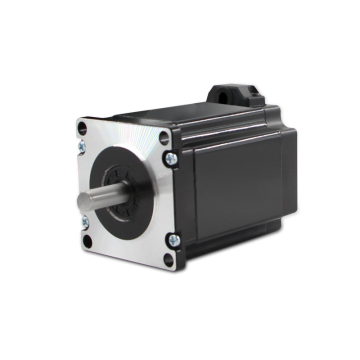
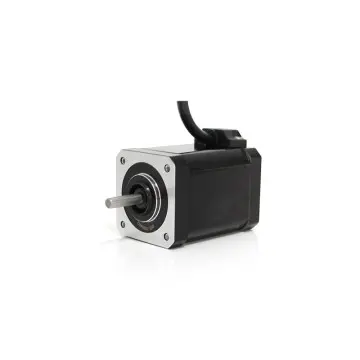
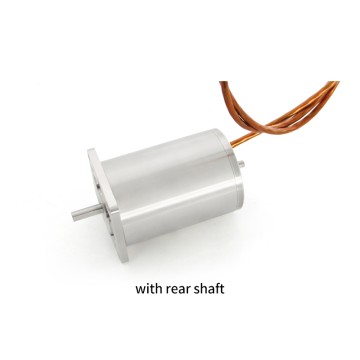
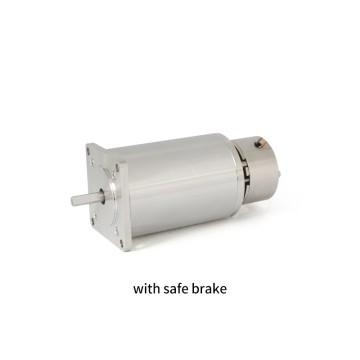
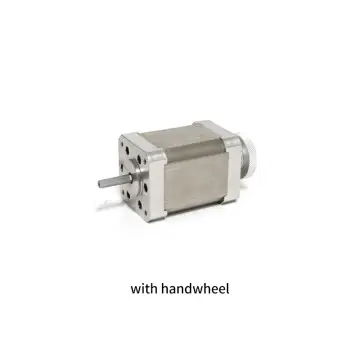


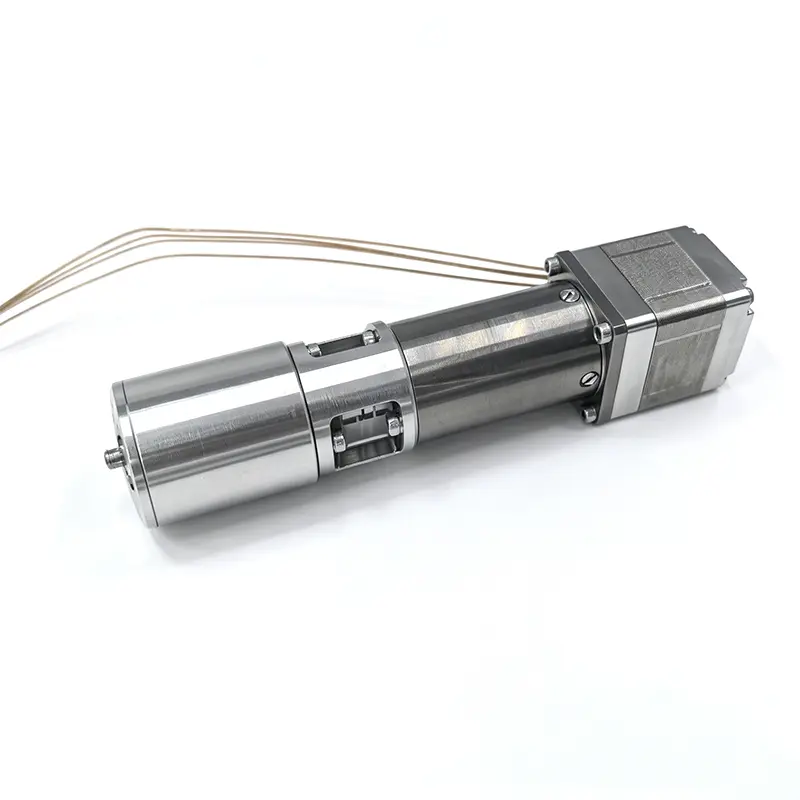
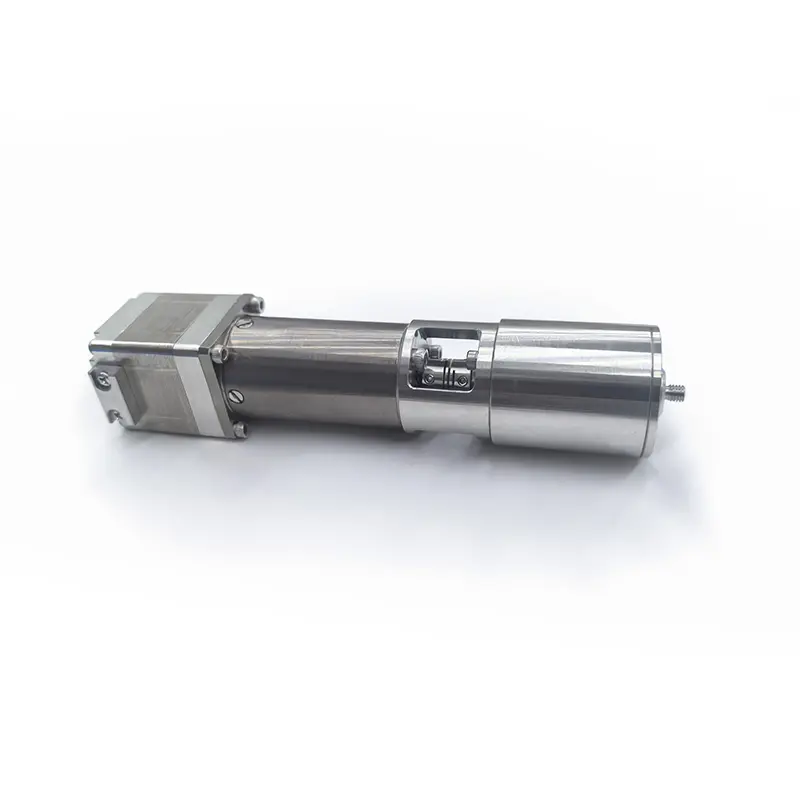
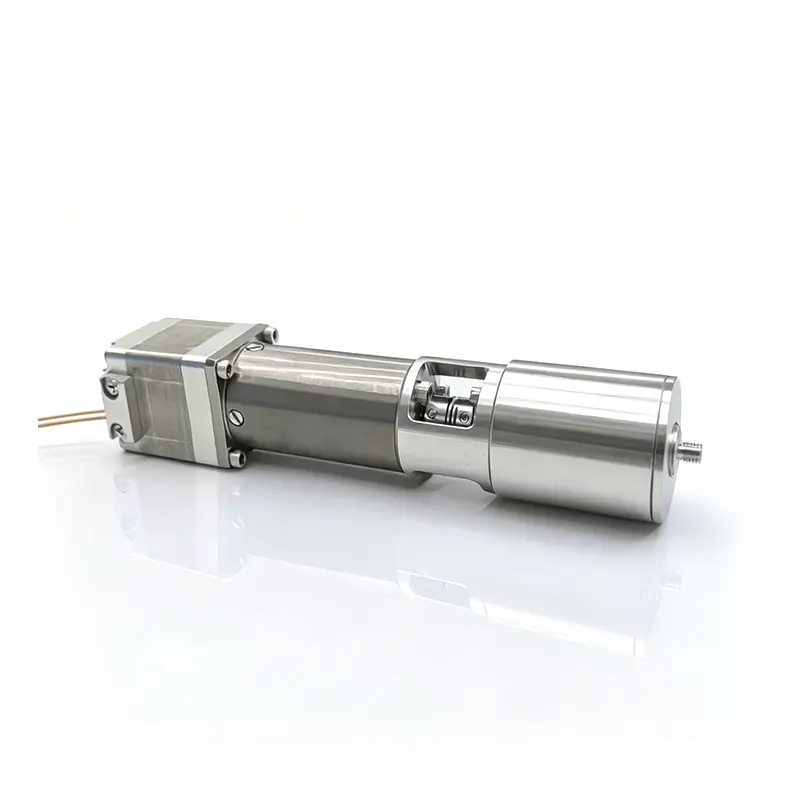
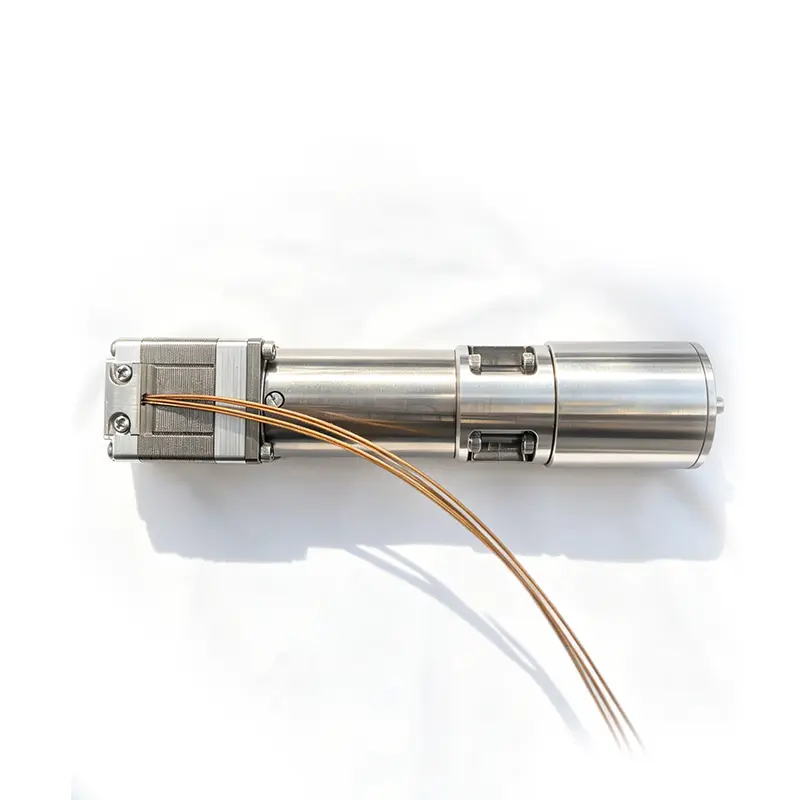
KLA-AC-300 High and Low Temperature Micro Electric Actuator | Applied to Satellite Precision Motion Mechanism
Vacuum · Cryogenic · High-temperature · Radiation
Environmental temperature ratings
| Environmental temperature rating code | Temperature range (℃) |
Vacuum class (Pa,optional) |
Radiation resistance (Gy,optional) |
| VHT1 | -40~+85 | 10-1/10-3/10-5/10-710-9 | 1x1000/1x10000/1x105/1x106 |
| VHT2 | -40~+150 | 10-1/10-3/10-5/10-710-9 | 1x1000/1x10000/1x105/1x106 |
| VHT3 | -20~+200 | 10-1/10-3/10-5/10-710-9 | 1x1000/1x10000/1x105/1x106 |
| VHT4 | -80~+120 | 10-1/10-3/10-5/10-710-9 | 1x1000/1x10000/1x105/1x106 |
Blank = Non-vacuum
V1 = Low pressure or vacuum to 10-¹ Pa
V3 = Low pressure or vacuum to 10-3Pa
V5 = Vacuum to 10-5Pa
V7 = Vacuum to 10-7Pa
V9 = Vacuum to 10-9Pa
RAD1K:1x1000Gy
RAD10K:1x10000Gy
RAD100K:1x10⁵Gy
RAD1MK:1x10⁶Gy
Description
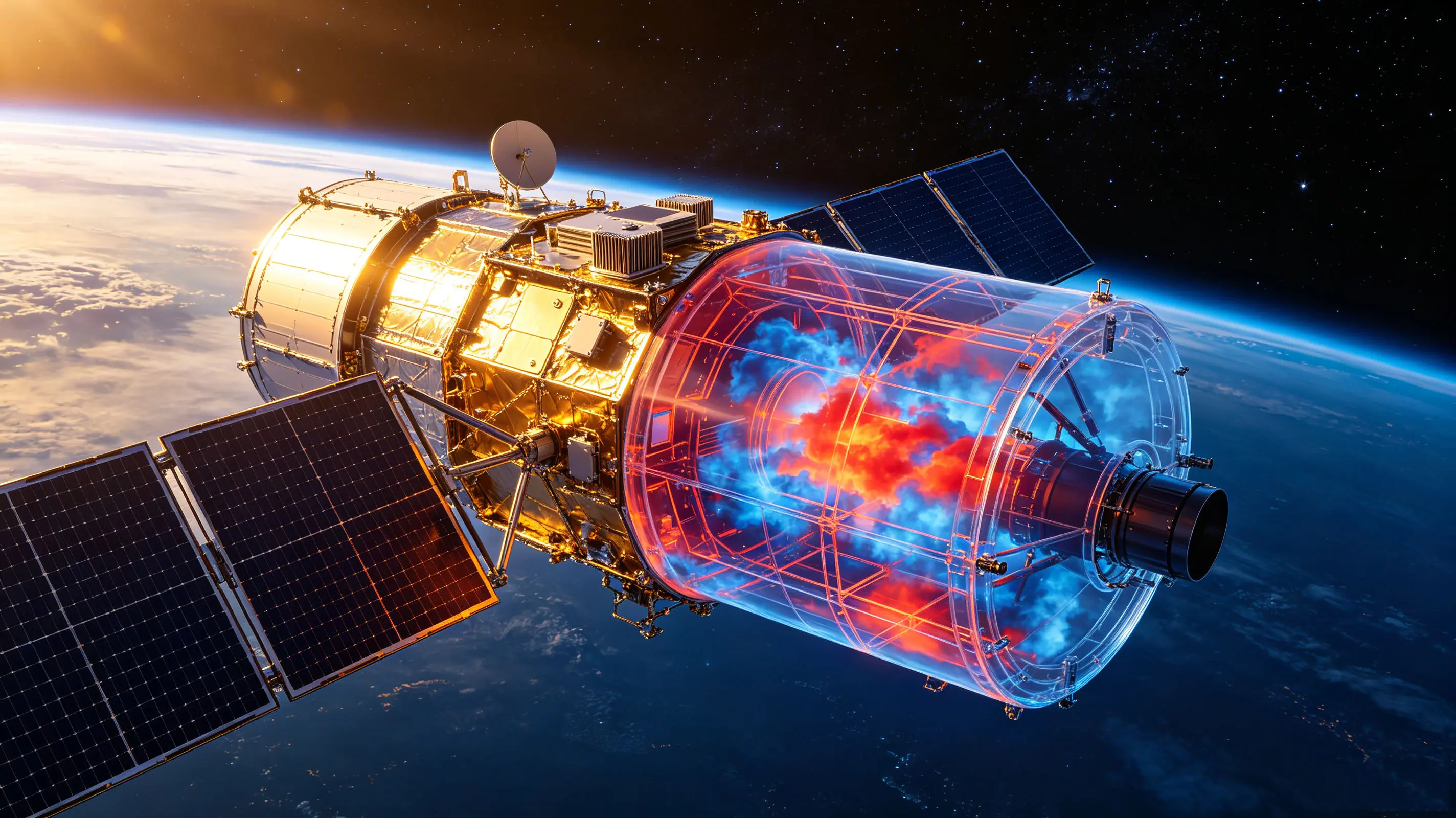
During the on-orbit service of a satellite, its surface and internal structure experience drastic temperature alternation-on the direct sunlight side, the temperature can rise rapidly to above + 150 C, while on the dark side or in the cold dark environment of deep space, the temperature drops sharply to below -100 C, which recurs in the orbital period of about 90 minutes. It poses a severe thermodynamic test for any moving parts on the satellite. The high and low temperature electric actuator is a precision motion solution specially developed for this extreme temperature difference environment. By selecting structural materials with highly matched thermal expansion coefficients, adopting special lubrication methods with wide temperature range stability and optimizing the drive control algorithm, it ensures that in the temperature range of -80 ℃ to + 200 ℃, The transmission accuracy and output torque of the actuator are not significantly attenuated, thus providing reliable power and positioning guarantee for key tasks such as satellite antenna pointing, solar wing deployment, optical load focusing and manipulator operation.
In the laser communication terminal of a satellite, the acquisition and tracking of the beam from a ground station or a relay satellite requires a pointing accuracy of the order of micro-radians, while the two-dimensional pointing mechanism inside the terminal needs to maintain a very high angular resolution in high and low temperature cycles. The high and low temperature electric actuator, with its motion resolution of about 1 nm and high-precision angle encoder, enables the terminal to accurately compensate the pointing deviation caused by thermal deformation and ensure the stable establishment of the communication link. In a complete thermal cycle test of the orbit cycle, the high and low temperature electric actuator needs to verify its return clearance and positioning repeatability at multiple set points of normal temperature, low temperature and high temperature respectively, and the test results show that its mechanical backlash is maintained within the allowable tolerance in the whole temperature range. This ability to maintain accuracy throughout the life cycle is particularly important for high-orbit communication satellites with a design life of more than ten years, because the satellite cannot be physically repaired or replaced while in orbit. In addition, the vacuum compatibility of the high and low temperature electric actuator enables it to work normally in the vacuum environment of the satellite module without affecting the performance of its own or adjacent electronic equipment due to the deflation or discharge phenomenon in the low pressure environment.
In the SAR satellite, every deployment joint and locking mechanism of the deployable reflector antenna must be successfully deployed in the first time after the satellite is put into orbit, and before deployment, these mechanisms have undergone extremely rigorous thermal vacuum cycle verification on the ground. In this process, the high and low temperature electric actuator not only provides the deployment power, but also provides precise buffer and positioning control at the end of the deployment to avoid the deformation of the reflector caused by excessive impact. At the same time, the momentum wheel and thruster vector adjustment mechanism on the satellite also need to rely on the high and low temperature electric actuator to achieve the direction of thrust fine-tuning, so as to complete the orbit transfer with the highest propellant efficiency. In deep space exploration missions, the spacecraft is extremely far away from the sun and the ambient temperature is extremely low. At this time, the low temperature start-up ability of the high and low temperature electric actuator is very important. It must be able to wake up smoothly and complete the preset actions, such as the opening of the scanning mechanism of the scientific payload or the reorientation of the high-gain antenna, after several months of low temperature dormancy during the glide phase. Every design detail of the high and low temperature electric actuator reflects the engineering transformation after a deep understanding of the extreme space environment, and its reliable operation is directly related to the success or failure of the satellite mission. Whether it is the rapid revisit of the LEO remote sensing constellation or the precise control of the deep space probe across hundreds of millions of kilometers, the high and low temperature electric actuators are the basic electromechanical components supporting these space activities, and the long life and low power consumption characteristics of the high and low temperature electric actuators also meet the strict restrictions on resource consumption of space products. The application fields of high and low temperature electric actuators are extending from traditional satellite platforms to more complex systems such as manned spacecraft and space station manipulators, showing broad prospects for space engineering applications.
KLS series linear motion stage
30 = 30mm
40 = 40mm
60 = 60mm
80 = 80mm
140 = 135mm
170 = 170mm
50、100、150、200、250、300、350、400、450、500、550、600、650、700、750、800、850、900、950、1000、1050、1100、1150、1200、1250、1300、1350、1400、1450、1500
Please refer to the specification tables for the available stroke length.
2、4、5、10、16、20mm
Please refer to the specification tables for the available screw lead.
ISC: in-line (with coupling)
PR: parallel on right side (with high precision gear, ratio 1:1 )
PL: parallel on left side (with high precision gear, ratio 1:1 )
PB: parallel below the linear motion stage (with high precision gear, ratio 1:1 )
| Environmental temperature rating code | Temperature range (℃) |
Vacuum class (Pa,optional) |
Radiation resistance (Gy,optional) |
| RHT | -20~+200 | 10-3 | 106 |
| SHT | -20~+200 | 10-3/10-5/10-7 | - |
| HT | -20~+150 | 10-3/10-5/10-7 | - |
| NTL1 | -40~+85 | 10-3/10-5 | - |
| NTL2 | -40~+100 | - | - |
| NTL3 | -65~+125 | 10-3 | - |
| NTL4 | -80~+40 | 10-3 | - |
| NTL5 | -55~+150 | - | - |
Blank = Non-vacuum
V3 = Low pressure or vacuum to 10-3Pa
V5 = Vacuum to 10-5Pa
V7 = Vacuum to 10-7Pa
Blank = No radiation resistance
RH = Radiation resistance (total dose 106Gy)
e.g.
KH42 = KH series 42mm stepper motor
KVM57 = KVM series 57mm stepper motor
KECM400 = KECM series 400W servo motor
KSSM750 = KSSM series750W servo motor
PB60L2 = PB60 2-stege reducer (please specify the reducer stage, e.g. L1 or L2)
| Model | Thrust (N) | Stroke (mm) | Minimum Incremental Step (nm) | Repeatability (μm) |
| KLA-AC-300 | 300 | ±3 | 20 | ±2 |
| KLA-AC-600 | 600 | ±10 | 18 | ±2 |