Top 5 Stepper Electric Motors for Efficient Automation?
In the world of automation, Stepper Electric motors play a pivotal role. These precision-driven components are essential for various applications, from robotics to CNC machines. Recent reports indicate that the global stepper motor market is projected to reach $7.6 billion by 2027, growing at a CAGR of 5.2%. This underscores the increasing reliance on stepper technology in modern manufacturing processes.
Stepper Electric motors are choice components for their ability to deliver high torque at low speeds and maintain accurate positioning without feedback devices. However, selecting the right type can be daunting. Not all stepper motors are created equal. Their design and efficiency greatly impact the performance and overall success of automation systems.
Despite the increasing adoption of Stepper Electric motors, challenges remain. Engineers often grapple with thermal management and resonance issues. Understanding the core features and performance metrics of prominent models is crucial for successful implementation. This article delves into the top contenders in the stepper motor landscape, highlighting their strengths and potential drawbacks.
Understanding Stepper Electric Motors and Their Role in Automation
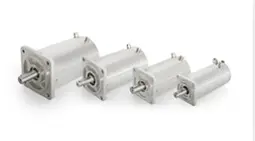
Stepper electric motors play a crucial role in modern automation. They convert electrical energy into precise mechanical movement. These motors are known for their ability to provide exact positioning. This feature is essential in applications like 3D printing and CNC machinery.
One key aspect of stepper motors is their control method. Unlike standard motors, they move in discrete steps. This means they can achieve very fine movements without losing accuracy. However, this can also lead to missed steps if not managed correctly. Users often face challenges in tuning their systems for optimal performance.
Choosing the right stepper motor can enhance efficiency significantly. Consider factors such as torque and speed. It is important to align the motor with the specific task. Sometimes, users overlook these details, leading to inefficiencies. Adapting the system may require trial and error. Understanding these nuances is vital for success in automation projects.
Key Features to Consider When Selecting Stepper Motors for Automation
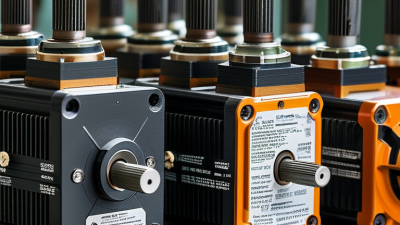
When selecting stepper motors for automation, key features play a crucial role in ensuring efficiency. It’s important to understand holding torque, detent torque, and step angle. Holding torque determines how much weight your motor can support when stationary. Higher holding torque contributes to more precise positioning, especially in applications like 3D printing and CNC machining.
Next, consider the step angle, which significantly affects the motor’s precision. Smaller step angles result in finer resolutions. However, this might require more complex control systems. Be prepared for the potential trade-off between simplicity and performance. Detent torque, although often overlooked, affects how a motor behaves when not powered. If too low, your setup may wobble, compromising accuracy.
The operating speed and current rating are also critical parameters. Higher speeds often mean less torque, which can lead to efficiency issues. Sometimes, the temperature rise becomes a concern, and the motor may require cooling. Evaluate the motor’s performance under load to understand its reliability. These insights will help you choose the best stepper motors for your automation needs.
Top 5 Efficient Stepper Electric Motors and Their Benefits
Stepper electric motors are integral to automation, offering precision and reliability. These motors excel in applications requiring precise position control. According to industry reports, the market for stepper motors is projected to grow at a CAGR of over 5% from 2021 to 2026, driven by advancements in automation technology.
One notable advantage of stepper motors is their ability to maintain torque at low speeds. This is crucial in applications like 3D printing and CNC machinery, where consistent performance is necessary. Additionally, stepper motors are often easier to control compared to traditional motors. Their open-loop control systems reduce the need for complex feedback systems, saving costs and simplifying integration.
However, there are challenges. Stepper motors can experience resonance issues at certain speeds, leading to inefficiencies. Users must carefully consider their operating range to avoid this. Furthermore, while stepper motors are efficient, they can consume significant energy during standby. This highlights the importance of optimization in design and application. Selecting the right motor involves weighing these benefits against potential drawbacks.
Applications of Stepper Motors in Various Automation Industries
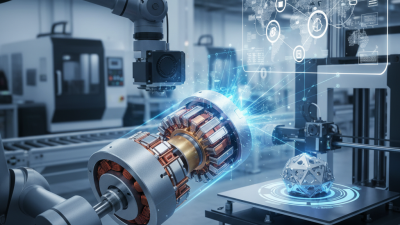
Stepper motors play a pivotal role in various automation industries. Their design allows for precise control of movement, making them ideal for applications like 3D printing, CNC machines, and robotic arms. In 3D printers, for instance, stepper motors enable accurate layering of materials, resulting in high-quality prints. The ability to move in small, defined steps enhances precision, which is crucial in this industry.
In robotics, stepper motors contribute significantly to movement accuracy. They facilitate smooth and controlled motion in robotic arms, ensuring intricate tasks are executed with care. Moreover, in packaging industries, these motors control the movement of conveyor belts, making operations faster and more efficient. Many factories rely on stepper motors for their reliability in high-demand environments.
However, there are challenges to consider. Stepper motors can overheat if subjected to heavy loads for prolonged periods. This can lead to reduced performance and potential motor failure. Engineers must balance speed and torque requirements to avoid such issues. With careful design and testing, many industries successfully harness the power of stepper motors for automation.
Comparative Analysis of Leading Stepper Motors for Performance and Cost
Stepper motors are critical for automation, offering precise control and reliability. When comparing the top models, efficiency and cost become pivotal. Performance metrics such as torque and speed should be carefully considered. Each motor has its strengths and weaknesses, impacting overall automation efficiency.
One motor may excel in torque but fall short in speed. Another might be cost-effective, yet lack the precision required for intricate tasks. It’s essential to analyze your specific application needs before making a decision. For instance, high-torque applications need motors with robust build quality, which may increase costs.
Moreover, the complexity of installation and integration into existing systems shouldn't be overlooked. It can be challenging to find a balance between performance and affordability. Some cheaper models may have shorter lifespans due to lower quality materials. Choosing the right stepper motor is not just about performance; it's also about ensuring long-term reliability in your automation projects.