Top 10 Stepper Electric Tips for Global Buyers to Consider
In the realm of industrial automation, "Stepper Electric" technology plays a pivotal role. A recent report by Research and Markets indicates that the global stepper motor market is expected to reach $3.1 billion by 2026, reflecting a compound annual growth rate of 5.2%. This growth underscores the increasing demand for precision control in various applications, from robotics to HVAC systems.
Global buyers must carefully assess their requirements before investing in stepper electric solutions. The choices available can be overwhelming, and an informed decision is crucial. Brands vary widely in quality and performance. Many buyers overlook this, leading to costly mistakes. Reliability and efficiency are essential, and not all manufacturers can deliver.
Understanding the nuances of stepper electric systems can greatly enhance operational productivity. However, missteps in selection can lead to inefficient systems and increased downtime. An industry report highlighted that 30% of machinery failures stem from improper components. Thus, thorough research and evaluation are necessary for success in this rapidly evolving market.
Essential Features to Look for in Stepper Electric Motors
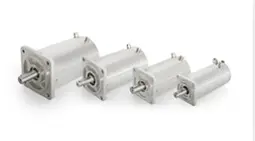
When considering stepper electric motors, certain key features stand out.
Torque is crucial.
Higher torque ensures better performance in demanding applications. Look for models that specify their torque ratings.
This information provides insight into their operational capabilities. Another important factor is step angle.
A smaller step angle typically results in smoother movement. This is essential for precision tasks.
Additionally, consider the motor's holding torque.
This determines how well the motor can hold its position when not in motion.
It's vital for applications requiring stability. Also, evaluate the driver compatibility.
A compatible driver allows for optimal performance. If unsure, seek expert guidance on the best pairings for your steps.
Thermal management is an area often overlooked.
Ensure that the motor can handle heat generated during operation. Overheating can lead to failure, so it’s worth investigating cooling options.
Lastly, inspect the construction quality. Robust materials ensure longevity.
Regular checks on motor performance and wear can prevent unexpected breakdowns.
It’s essential to balance expectations with realistic performance capabilities, ensuring a successful investment.
Understanding Types of Stepper Electric Motors: Unipolar vs Bipolar
When selecting stepper electric motors, understanding the two main types—unipolar and bipolar—is critical for global buyers. Unipolar motors feature a simpler design, consisting of coils that allow for easy control. They are typically easier to drive but may provide less torque compared to bipolar motors. Research indicates that unipolar motors are common in applications requiring less precision.
Bipolar stepper motors have a more complex arrangement. They utilize both windings in each step, allowing for greater torque and precision. A report from the International Robotics Federation highlights that bipolar motors are preferable in robotics and CNC machinery, where efficiency is paramount. Buyers should acknowledge that bipolar motors can require more sophisticated control systems.
Tip 1: Assess your project's torque requirements. If high torque is essential, a bipolar motor may be the ideal choice.
Tip 2: Consider the complexity of your control system. Unipolar motors can simplify wiring and programming, making them suitable for smaller projects.
Tip 3: Evaluate the workload. For continuous heavy-duty applications, bipolars often outperform unipolars. Understanding these nuances can lead to more informed purchasing decisions.
Comparison of Unipolar and Bipolar Stepper Motors
Key Performance Specifications for Stepper Electric Motor Selection
Selecting the right stepper electric motor is crucial for any project. Understanding key performance specifications can significantly impact your application. Torque, for example, is essential. Higher torque means better performance in gear applications. Knowing the torque rating can help you choose the right motor size.
Another important specification is step angle. A smaller step angle allows for finer control. However, this often means a more complex control system. Don’t overlook the power rating as well. It indicates how well the motor can handle your requirements. Inadequate power can lead to stalling.
Heat dissipation should also be considered. Motors that run too hot may fail prematurely. Thus, it’s wise to evaluate cooling mechanisms. Pay attention to environmental factors too. Dust and moisture can impact motor reliability. Balancing all these specifications is not easy. Reflecting on your specific needs will guide your decisions.
Top 10 Stepper Electric Tips for Global Buyers to Consider - Key Performance Specifications for Stepper Electric Motor Selection
| Specification |
Description |
Typical Values |
| Step Angle |
The angle of each step of the motor. |
1.8° to 0.9° |
| Holding Torque |
The torque required to keep the motor in position. |
0.1 to 3.5 Nm |
| Rated Voltage |
Operating voltage for optimal performance. |
2.8V to 48V |
| Coil Configuration |
Number of winding coils in the motor. |
Bipolar, Unipolar |
| Phase Count |
Number of phases in the motor. |
2, 4, 5, 8 |
| Current Rating |
The maximum allowable current for operation. |
0.5A to 6A |
| Backlash |
The play in the system when reversing direction. |
0.1° to 1.0° |
| Temperature Rating |
Maximum operating temperature. |
-20°C to +100°C |
| Weight |
The mass of the motor. |
0.2 kg to 3 kg |
| Life Expectancy |
Typical lifespan of the motor under normal operation. |
500 to 10,000 hours |
Common Applications and Industries Utilizing Stepper Electric Motors
Stepper electric motors find extensive use across various industries. These motors are crucial in robotics, medical devices, CNC machines, and automation systems. In fact, the global stepper motor market was valued at approximately USD 3 billion in 2022 and is projected to reach USD 4.5 billion by 2028, according to a recent industry report. This growth highlights their importance in precise control applications.
Healthcare is a notable sector utilizing stepper motors. Devices like MRI machines and surgical robots rely on these motors for exact positioning. Reports indicate that the demand for medical robotics is expected to grow at a CAGR of 25% in the next five years. Similarly, automation in manufacturing benefits from stepper motors, allowing for more efficient processes. Many production lines are integrating these components to improve accuracy and reduce downtime.
While the benefits are significant, some challenges exist. For instance, stepper motors can experience overheating, which may affect performance. Additionally, selecting the right motor for specific applications requires expertise and understanding. Prospective buyers should consider torque ratings, step angles, and control methods. Making informed decisions is crucial in this fast-evolving landscape.
Tips for Selecting the Right Stepper Driver for Your Project
When selecting a stepper driver for your project, understanding the specifications is crucial. According to a recent industry report, over 70% of automation failures can be traced back to incorrect driver selection. This perspective emphasizes the need for a robust selection process.
One important tip is to consider the current rating of the driver. A higher current rating can mean better performance, but also more heat. Managing heat dissipation is vital, especially in compact environments. Many engineers overlook this aspect, which can lead to premature component failure.
Another key point is the microstepping capability. Some applications require smooth motion and high precision. A study found that using microstepping increases step resolution by 80%. However, too much microstepping might lead to torque loss, which can affect overall system performance. It's essential to find a balance that suits your project needs.
Finally, check for compatibility with your control system. Not all drivers support every control interface. A mismatch here could result in wasted resources and delays. Evaluate your options carefully. Testing various configurations can provide insights that specs alone cannot reveal.