China Best Stepper Gears for Precision and Performance Solutions?
In the realm of engineering, the significance of precision in motion control cannot be overstated. Stepper gears play a crucial role in various applications, from robotics to CNC machinery. According to a recent market analysis by Research and Markets, the global stepper motor market is projected to reach $5.1 billion by 2025, highlighting the industry's growth and demand for high-performance solutions.
Expert Dr. Alice Chen, a leading authority in the field of precision engineering, states, "The right stepper gears can enhance both accuracy and efficiency in automation systems." This statement reflects a belief held by many engineers: that quality gears are the backbone of effective machinery. However, sourcing the best stepper gears remains a challenging task due to varying standards and manufacturers’ inconsistencies.
Industry data reveals that nearly 30% of machinery performance issues stem from inadequate gear quality. As companies strive for excellence, the need for optimal stepper gears is more pressing than ever. Reflecting on the evolving technology landscape, it's essential to continually reassess the criteria that define the best gear solutions for performance and reliability.
China's Leading Stepper Gear Manufacturers and Their Market Influence
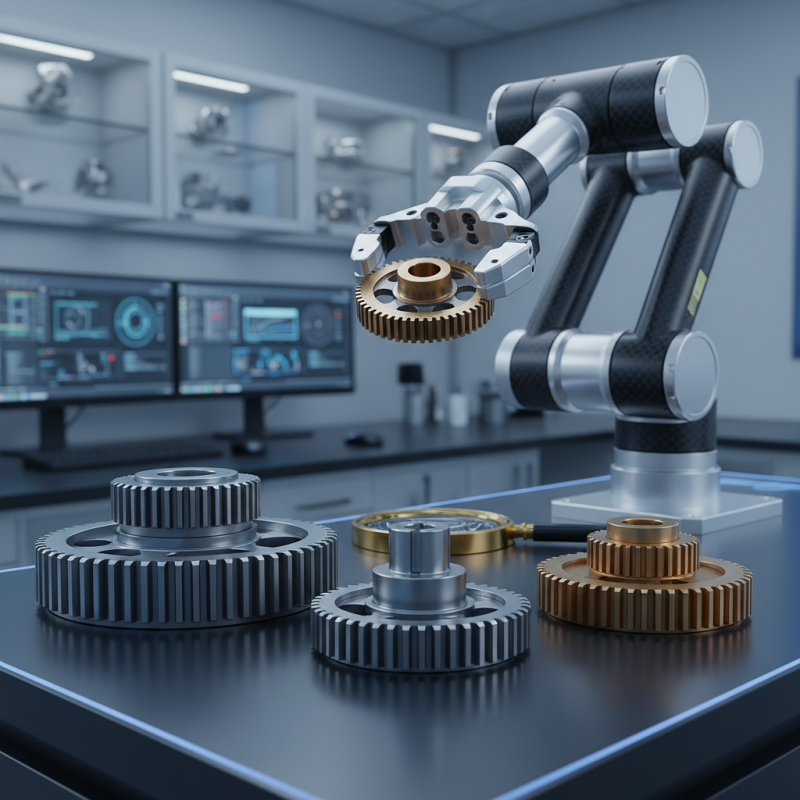
China is home to many leading stepper gear manufacturers. These companies shape the market with innovative design and production techniques. Their products are essential in automation and precise control applications. The influence of these manufacturers is evident in various industries, from robotics to medical devices. They deliver high-quality stepper gears that enhance both precision and performance.
When selecting a stepper gear manufacturer, consider their expertise in the field. It's essential to assess their production capabilities and technology. Ensure they have experience in your specific industry. A reliable manufacturer will not only meet your requirements but also offer support throughout the development process.
Tip: Look for manufacturers with certifications. This can indicate their commitment to quality and reliability. Also, request samples to evaluate their performance. Understanding the nuances of different gears can help in making informed decisions. Always consider how a manufacturer adapts to market changes. This adaptability can reflect their long-term viability and customer focus.
Key Features of Precision Stepper Gears for Enhanced Performance
Precision stepper gears play a crucial role in various applications, especially in robotics and automation. These gears are designed to deliver accurate motion control. Recent industry reports indicate that the demand for high-precision stepper gears is growing at a rate of approximately 5.3% annually. This trend highlights the importance of performance-enhancing features.
Key features of these gears include high torque output, low backlash, and improved thermal stability. A study published by the International Journal of Advanced Manufacturing Technology noted that low backlash can reduce positional errors significantly. This accuracy is essential in applications where precision is non-negotiable. As manufacturers push for greater efficiency, incorporating advanced materials and coatings can further enhance performance.
However, the transition to these advanced gear systems is not without its challenges. Some users report difficulties in integrating precision gears with legacy systems. Compatibility issues can delay projects and inflate costs. Real-world feedback emphasizes the need for thorough testing and customization in gear selection, as each application has unique demands that affect performance. It's critical to evaluate these factors to ensure optimal outcomes.
China Best Stepper Gears for Precision and Performance Solutions
| Feature |
Description |
Benefit |
| High Precision |
Gear designs that minimize backlash |
Improved accuracy in positioning and movement |
| Durable Materials |
Manufactured with high-strength alloys |
Longer operational life and reliability |
| Compact Design |
Small footprint while maintaining performance |
Ideal for space-constrained applications |
| Low Noise Operation |
Innovative design techniques that reduce sound |
Enhanced user experience, suitable for quiet environments |
| Adaptability |
Compatible with various actuator systems |
Flexibility in design engineering and applications |
| Cost Efficiency |
Affordable pricing without compromising quality |
Cost-effective solutions for businesses and manufacturers |
Industry Applications of Stepper Gears: Trends and Innovations
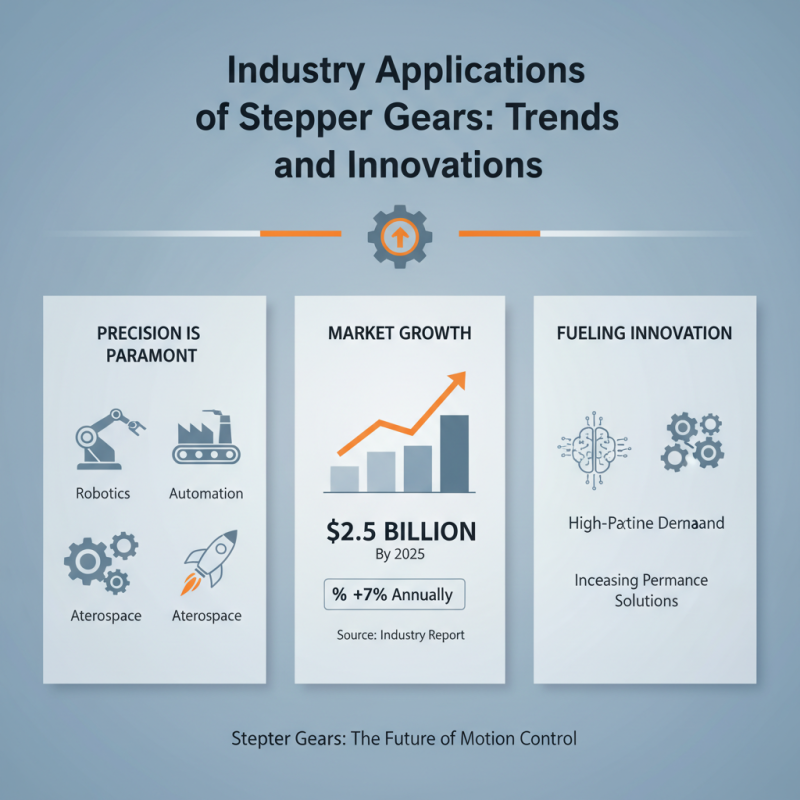
The applications of stepper gears in various industries are rapidly evolving. Precision is paramount in sectors like robotics, automation, and aerospace. According to a recent industry report, the market for stepper motors is projected to grow by over 7% annually, reaching $2.5 billion by 2025. This growth is fueled by the increasing demand for high-performance solutions.
Innovations are making stepper gears more efficient. For instance, manufacturers are integrating advanced materials like carbon fiber composites. These materials provide enhanced strength while reducing weight. Furthermore, companies are now focusing on digital technologies. Predictive maintenance systems can minimize downtime, leading to better operational efficiency. As reported by Mechanical Engineering Magazine, factories adopting these innovations witness nearly a 20% increase in machinery performance.
However, there are challenges. The complexity of implementation can deter some companies. Integrating new technologies requires investment and training. Not all businesses have the resources for such transitions. Stakeholders need to weigh the potential benefits against the upfront costs. Continuous feedback and adaptation are essential. The future of stepper gears depends on balancing innovation with achievable solutions.
Comparative Analysis of Stepper Gear Types: NEMA vs. Non-NEMA
When it comes to stepper gears, two main categories often emerge: NEMA and non-NEMA types. NEMA, which stands for the National Electrical Manufacturers Association, offers standardized sizes. These gears are popular in various applications, particularly in robotics and CNC machinery. Their predictable dimensions simplify replacements and upgrades. Many engineers appreciate this consistency, as it reduces compatibility issues.
Non-NEMA stepper gears present a different scenario. They offer more flexibility in design and function. However, this flexibility comes with challenges. Customization can lead to difficulties in finding suitable parts later. Engineers may face a steep learning curve when shifting from NEMA to non-NEMA options. Evaluating these alternatives requires thorough testing and adaptation.
Compatibility is crucial when choosing between the two types. NEMA gears tend to dominate due to their reliability. Still, non-NEMA gears can deliver unique advantages. Recognizing the specific needs of your project is key. It often requires careful consideration of precision and performance. Finding the right balance may take time and patience.
Comparative Analysis of Stepper Gear Types: NEMA vs. Non-NEMA
This chart illustrates the performance metrics of various stepper gear types, comparing NEMA (National Electrical Manufacturers Association) standard gears with Non-NEMA variants based on torque, speed, and reliability.
Technical Specifications: Understanding Gear Ratios and Torque Ratings
When evaluating stepper gears for precision applications, understanding gear ratios is essential. Gear ratios define the relationship between the input and output speeds. A higher gear ratio increases torque while reducing speed. This means you can achieve more power at a lower RPM, which is crucial for tasks requiring precision.
Torque ratings indicate how much load the gears can handle. Higher torque ratings are vital for operations that demand strength and reliability. However, overlooking the balance between torque and speed can be a mistake. Too much torque may lead to overheating and premature wear. This is an area where engineers must tread carefully.
Practical testing often reveals the limitations of theoretical calculations. Real-world applications can challenge the expected performance. For instance, slight misalignments can affect efficiency. Maintaining quality and performance in varying conditions is a continuous process. Understanding these technical specifications is key to making informed decisions in gear selection, which ultimately impacts overall system performance.