Top Types of Stepper Motor Rotor Explained for Your Projects?
In the world of automation and robotics, understanding the nuances of the Stepper Motor Rotor is crucial. Industry expert Dr. Lisa Thompson, a prominent figure in motion control technologies, emphasizes, “The stepper motor rotor can make or break your project's success.” This statement highlights the importance of selecting the right rotor type for your applications.
Stepper Motor Rotors come in various designs, each offering unique benefits. Some are geared for precision, while others prioritize speed or torque. The difference can significantly affect performance in projects ranging from 3D printers to CNC machines. As designers and engineers delve deeper into rotor characteristics, they must also consider the balance between complexity and efficiency. This complexity can often lead to challenges in achieving optimal performance.
Many creators overlook the role of rotor design in overall system performance. Mistakes are common, such as choosing a rotor that does not align with the application’s requirements. Reflection on these choices is vital for success. Hence, understanding the stepper motor rotor not only fosters better design but also enhances project outcomes.
Understanding Stepper Motors and Their Functionality
Stepper motors are essential in various applications, from robotics to 3D printing. Understanding their functionality is crucial for choosing the right motor for your project. A stepper motor converts digital pulses into mechanical movement. This enables precise control over position and speed, which is vital in modern automation.
Research indicates that stepper motors have a high holding torque, making them ideal for applications requiring stable positioning. According to industry reports, stepper motors operate with an efficiency rate exceeding 80%, providing an effective solution for many engineering challenges. The different types of rotors, such as permanent magnet, variable reluctance, and hybrid, each serve specific needs, impacting performance and control.
However, the choice of motor isn't always straightforward. Factors like load requirements and application conditions can complicate decisions. Engineers often face challenges like torque drop-off at high speeds, which can limit performance. Feedback systems can mitigate these issues but add complexity. Understandably, the intricacies of stepper motors require careful consideration to achieve desired outcomes in projects.
Defining the Various Types of Stepper Motor Rotors
Stepper motors are integral in various applications, each rotor type offering unique advantages. The two main types of stepper motor rotors are permanent magnet rotors and variable reluctance rotors. Permanent magnet rotors feature a permanent magnet structure, providing excellent holding torque and precise positioning. They are ideal for applications that demand high performance and accuracy.
Variable reluctance rotors, on the other hand, rely on the magnetic attraction of soft iron teeth. This design allows for simplicity and cost-effectiveness, making them suitable for high-speed applications. However, they may not provide as much holding torque as permanent magnet rotors.
When choosing a rotor type, consider your project's specific needs. Evaluate factors like torque, speed, and precision. Tips: Always prototype with the rotor type you're considering. Test its performance under load to ensure it meets your expectations. Understanding the distinct characteristics will help you avoid costly mistakes in the long run. Selecting the right rotor can significantly impact your project's outcome.
Exploring Permanent Magnet Stepper Motor Rotors
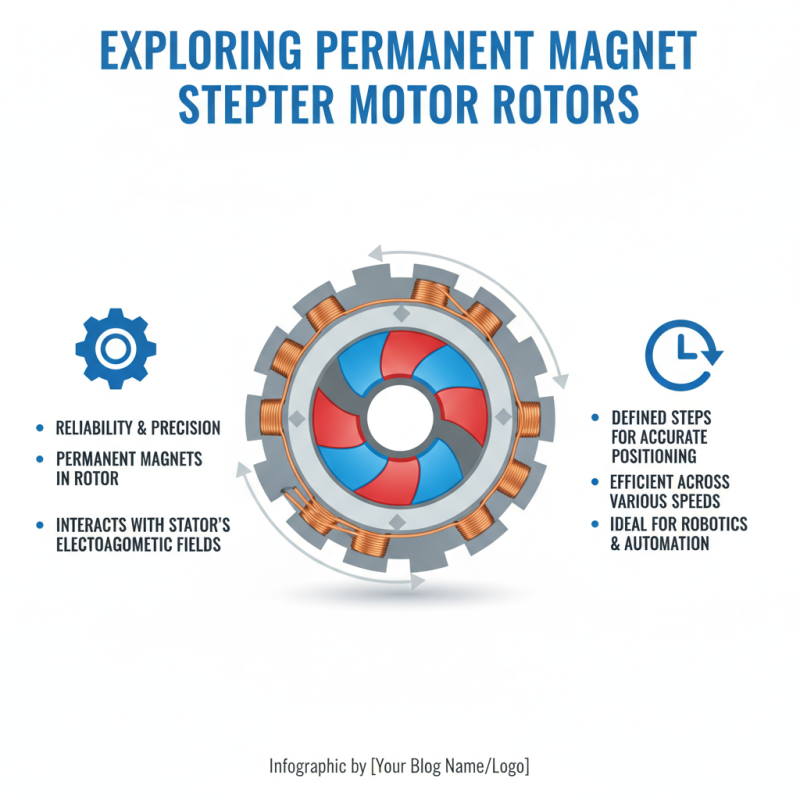
Permanent Magnet Stepper Motors are widely used in various applications due to their reliability and precision. Their rotors contain permanent magnets, which interact with the stator's electromagnetic fields. This interaction creates defined steps, ensuring accurate positioning. These motors operate efficiently across a range of speeds, making them ideal for robotics and automation.
One common challenge with permanent magnet stepper motors is resonance. When operated at certain speeds, they can experience vibrations. This can affect performance and efficiency. Proper control strategies and tuning can mitigate these issues. Users often need to experiment with different parameters to find the optimal settings for their specific application.
Designing a system with these motors requires careful consideration. The rotor’s construction affects the overall performance and torque. Users should evaluate their project's requirements thoroughly. A well-designed rotor improves efficiency and lifespan. Balancing magnetic strength and weight is crucial for optimal performance. In some cases, unexpected issues can arise, leading to reflections on design choices.
Examining Variable Reluctance Stepper Motor Rotors
When examining variable reluctance stepper motor rotors, it’s essential to understand their unique structure. These rotors primarily consist of ferromagnetic materials that interact with the stator. The design allows for multiple teeth to be arranged around the rotor. Each tooth becomes magnetized in relation to the stator phases. This interaction generates movement with precision and control.
One key aspect of variable reluctance motors is how they operate without permanent magnets. While this design simplifies some aspects, it can also create challenges. The rotor's speed is heavily influenced by the load and the frequency of the input signals. If not calibrated properly, the motor may stutter or fail to reach the desired speed. In practical applications, it’s crucial to ensure that the motor operates within its ideal parameters.
Additionally, users should be aware of the trade-offs involved. Variable reluctance motors can be less efficient under certain conditions. They may generate more vibration due to the construction of the rotor. This can affect the motor's longevity and reliability. Identifying these factors early can significantly enhance the project's overall success.
Top Types of Stepper Motor Rotor Explained for Your Projects
| Rotor Type |
Number of Phases |
Advantages |
Applications |
| Variable Reluctance |
2, 4, or 6 |
Simple construction, low cost, high step accuracy |
Robotics, CNC machines |
| Permanent Magnet |
1 or 2 |
High torque at low speed, precise positioning |
Printers, camera auto-focus systems |
| Hybrid Stepper |
2 |
Combines best of both Variable Reluctance and Permanent Magnet |
3D printers, CNC mills |
Analyzing Hybrid Stepper Motor Rotors and Their Applications
Hybrid stepper motors have gained significant traction in various applications due to their unique rotor design. These motors combine the features of both permanent magnet and variable reluctance stepper motors. This hybrid design allows for better torque characteristics and finer positional control. According to a report by MarketsandMarkets, the stepper motor market is expected to reach $4.82 billion by 2025, driven largely by the increased demand for precision in automation technologies.
The rotor of a hybrid stepper motor often features a salient pole. This design reduces the rotor's inertial mass, allowing for quicker acceleration and deceleration. This characteristic is particularly beneficial in applications such as robotics, CNC machinery, and 3D printing. However, there are drawbacks. The complex construction can lead to increased costs and maintenance. Engineers must consider these factors when selecting the right motor for their projects.
In terms of efficiency, the hybrid stepper motor offers more steps per revolution compared to traditional motors. This results in enhanced positional accuracy. Nevertheless, hybrid stepper motors can generate more heat during operation, which may necessitate additional cooling solutions. Depending on the application, this can impact overall design. Balancing performance and thermal management is critical for successful implementation in demanding environments.
Top Types of Stepper Motor Rotor Types and Their Applications
This chart illustrates various types of stepper motor rotors and the number of applications associated with each type. Permanent Magnet rotors are the most common in various applications, followed by Hybrid and Variable Reluctance rotors.