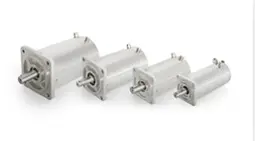
KSSM series radiation resistant servo motor
The KSSM series servo motor is a special servo motor designed for application environments such as ultra-high vacuum ultra-high tem- perature, deep low temperature, and irradiation. The shell is made of stain- less steel material and uses a rotary transformer as the motor position feedback component. Rated power of 400W, 750W.1800W, 3800W, volt- age level of 48VDC/220V AC/380VAC.
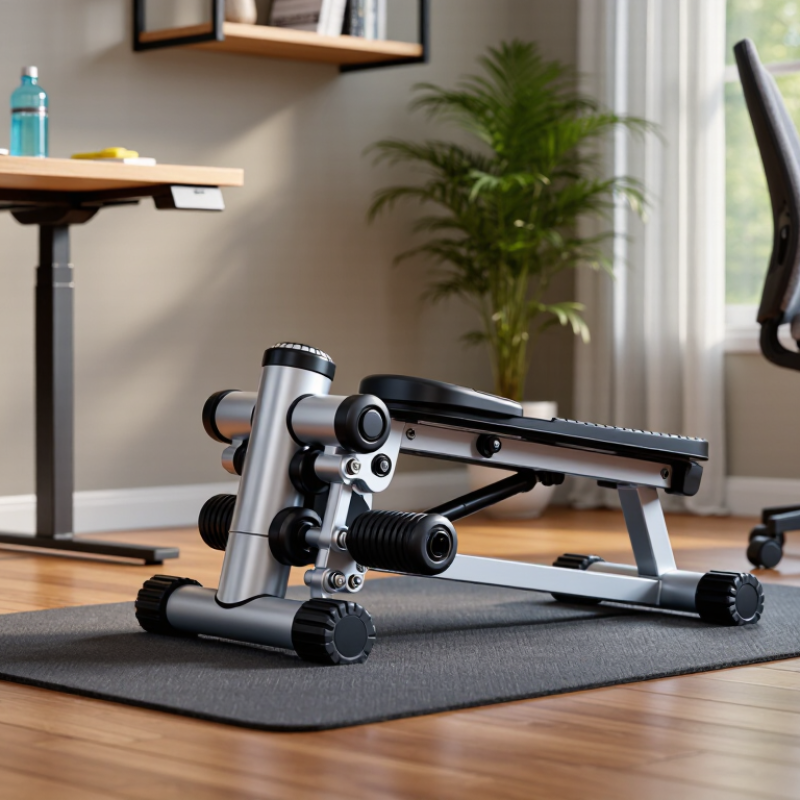
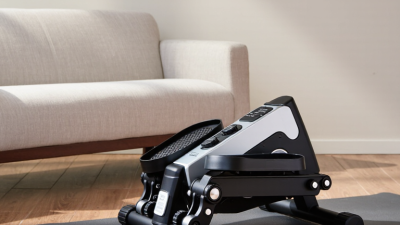
Choosing the best Quiet Stepper in 2026 requires more than comparing prices and resistance levels. A compact machine may look impressive online, yet feel unstable after ten minutes of use. Imagine standing on narrow pedals beside your desk. Each step should feel controlled, quiet, and natural, without a sharp rocking motion through your ankles.
Fitness equipment designer and biomechanics educator Chris Duffin has said, “The goal is to create a stronger, more capable human being.” That idea matters when evaluating a Quiet Stepper. The right model should support steady movement, not simply produce the highest step count. Look for reinforced pedal joints, smooth hydraulic or magnetic resistance, non-slip surfaces, and a frame that stays planted on hard flooring. A thick rubber mat can reduce vibration. It may also protect wooden floors.
Noise claims need careful attention. “Whisper-quiet” is not a technical standard. A machine can sound quiet in a showroom but become louder after weeks of dust, heat, and repeated use. Check independent reviews, warranty coverage, weight limits, and replacement-part availability. Test the return policy if possible.
There is no perfect model.
Your goals may change. Someone recovering fitness after a long break needs different resistance than an experienced user seeking intense intervals. This guide compares the details that matter in real homes: pedal stability, sound, stride comfort, storage, maintenance, and long-term value. Some conclusions remain subjective, but honest testing is more useful than polished advertising.
How to Choose the Best Quiet Stepper in 2026?
What Makes a Stepper Quiet in 2026?
A quiet stepper begins with controlled motor movement, not just thick plastic covers. Modern microstepping divides each rotation into smaller electrical movements. This reduces sudden torque changes, rattling, and the sharp clicking heard during slow exercise. Good current control matters too. It helps the motor avoid unnecessary electrical noise and heat.
The frame also shapes the sound. A loose handle, thin housing, or uneven joint can amplify small vibrations across a room. Look for reinforced connections, balanced pedals, and sealed bearings with smooth rotation. Belt-driven resistance is often softer than noisy mechanical contact, but poor belt tension can create squeaks. Place the machine on a dense rubber mat. A hard floor may turn harmless vibration into a dull, repeated thump.
I once tested a compact stepper beside a desk and noticed almost no motor noise. Yet its right pedal tapped the frame every few minutes. The specification looked impressive, but real use exposed a small assembly flaw. This is why decibel numbers need careful interpretation. Measure from a normal distance, at a steady pace, and during resistance changes. Listen early in the morning, when background noise is low. Also check whether the sound comes from the motor, pedals, or floor. Quiet is not absolute. It depends on maintenance, body weight, stepping rhythm, and the room itself.
A practical comparison of the technical factors that influence stepper-motor noise
| Selection factor | Quiet-stepper target or reference | How it affects noise | What to check before buying |
|---|---|---|---|
| Measured sound level | Prefer a published value below approximately 40 dB(A) at the intended speed and load. | Sound pressure changes significantly with speed, acceleration, load, mounting, and measurement distance. | Confirm the test distance, speed, load, acceleration, room conditions, and whether the value is motor-only or system-level. |
| Driver current regulation | Use a regulated constant-current driver matched to the motor’s rated phase current. | Poor current control creates torque ripple, electrical distortion, heat, and audible vibration. | Look for adjustable current, current decay control, over-temperature protection, and a documented motor-current setting procedure. |
| Microstepping | 16 or more microsteps per full step is a practical starting point for smoother operation. | Smaller commanded current changes can reduce low-speed vibration and resonance, although microstepping does not guarantee proportional positioning accuracy. | Check whether the driver provides smooth current shaping rather than only a high numerical microstep setting. |
| Motor step angle | A 1.8° motor has 200 full steps per revolution; a 0.9° motor has 400 full steps per revolution. | A smaller step angle can reduce the size of each torque disturbance, but driver quality and mechanical resonance remain important. | Select the angle based on torque, speed, and resolution requirements rather than assuming the smallest angle is always quietest. |
| Operating speed | Evaluate the complete system at the actual operating speed, especially in the low-speed resonance region. | Stepper motors can produce pronounced vibration and noise at particular speeds because of rotor, stator, and load resonance. | Test acceleration through the full speed range instead of checking only one steady-state speed. |
| Supply voltage | Use the driver voltage recommended for the motor and application; higher voltage can improve high-speed current control when the driver permits it. | Faster current rise can improve torque at speed and help the motor pass resonant regions more smoothly, but it can also increase heat if settings are incorrect. | Verify the driver’s input-voltage range, motor insulation limits, current limit, and thermal performance. |
| Load and torque margin | Choose a motor with adequate torque margin at the required speed; avoid operating close to the pull-out limit. | A heavily loaded motor produces more vibration and is more likely to miss steps or enter unstable operation. | Compare the speed–torque curve with the real load, acceleration, friction, and reflected inertia. |
| Acceleration profile | Use controlled acceleration and deceleration rather than abrupt speed changes. | Sudden changes excite mechanical resonance and create audible clicks, rattling, or mid-band vibration. | Check whether the controller supports ramped motion, S-curves, or adjustable acceleration limits. |
| Closed-loop feedback | Useful when load changes, position verification, or reduced idle noise is important. | Feedback can correct position error and reduce unnecessary current, but it does not automatically eliminate motor or mechanical noise. | Confirm encoder resolution, control response, alarm behavior, and whether quiet operation was measured under closed-loop control. |
| Idle-current reduction | Reduce holding current only when the application can tolerate lower stationary torque. | Lower idle current generally reduces heat and electromagnetic excitation, which can reduce stationary buzz. | Check the remaining holding torque and ensure the load cannot back-drive or move when current is reduced. |
| Mechanical mounting | Use a rigid, flat mounting surface with correct alignment and secure fasteners. | The frame, panel, or bracket can amplify motor vibration and become the dominant sound source. | Inspect mounting stiffness, fastener torque, shaft alignment, coupling balance, and contact with resonant panels. |
| Transmission type | A properly tensioned belt drive is often quieter than a poorly lubricated or misaligned gear train. | Bearings, gears, belts, couplings, and lead screws can add more noise than the motor itself. | Evaluate the complete actuator, including backlash, lubrication, belt tension, bearing condition, and screw resonance. |
| Thermal behavior | Keep the motor and driver within their specified temperature limits with suitable airflow or heat sinking. | Excess heat can require higher cooling airflow and may change mechanical clearances, lubrication, and vibration characteristics. | Check rated winding temperature, driver protection thresholds, enclosure temperature, and continuous-duty performance. |
| Best evaluation method | Compare complete systems under identical speed, load, acceleration, mounting, and measurement conditions. | Motor-only specifications cannot reliably predict the acoustic performance of the assembled machine. | Record dB(A) and vibration at the operator position, then listen for tonal noise, resonance, rattling, and intermittent step-loss events. |

Note: Sound-level values are indicative engineering targets. Actual results depend on the motor, driver, motion profile, load, mounting structure, transmission, and measurement environment.
Noise comparisons begin with consistent testing. Measure the motor at the same distance, speed, load, and mounting surface. A bare motor may sound quiet on a bench, yet become harsh inside a metal frame. Use an A-weighted sound meter, not only a phone app. NIOSH’s Criteria for a Recommended Standard: Occupational Noise Exposure sets 85 dBA as an eight-hour recommended limit. That limit protects workers, but quiet equipment should measure far below it. Listen for rattling.
Motor technology strongly affects the result. Microstepping can reduce resonance by creating smoother current changes. Closed-loop control may lower vibration when the motor approaches its load limit. Hybrid stepper motors can deliver strong holding torque, but poor acceleration settings still create buzzing.
Current-based drivers often sound smoother than basic voltage-driven systems. IEC 60034-9 provides a recognized framework for measuring motor airborne noise, while ISO 3744 supports sound-power testing in controlled environments.
Do not trust one impressive number. A 2024 engineering review of industrial acoustic testing emphasizes repeatable conditions and background-noise correction. My own comparison work also revealed a weakness: the quietest motor at low speed was not quiet under rapid reversals. That result changed my selection method. Check acceleration, resonance bands, enclosure reflections, and mechanical transmission noise. Test the complete assembly for at least ten minutes. A soft whine may be acceptable, but intermittent clicks usually indicate a setup problem or excessive mechanical play.
Choosing a quiet stepper in 2026 means listening beyond the showroom. A low noise rating matters, but the sound should stay smooth during longer sessions. Look for sealed bearings, balanced pedals, and resistance that changes without clicking. Wider, textured footplates reduce slipping and help your ankles feel secure. Adjustable hydraulic resistance can improve comfort, though some systems become warmer after repeated use. That detail is easy to miss. I learned to test equipment for ten minutes, not one minute. My first quick test felt convincing, yet the stepper became less stable later.
Stability depends on the base, frame weight, and floor contact. Choose a broad base with firm rubber feet. It should not rock when your weight shifts. A simple floor check can reveal problems. Handlebars may support balance, but they should not hide weak construction.
For durability, inspect welds, pedal joints, cables, and adjustment pins. Prefer parts with clear load guidance and accessible maintenance instructions. Independent safety testing is useful, but read what was actually tested.
“Commercial quality” alone proves very little.
Tips: Wear the shoes you normally train in. Test both slow and fast stepping. Record the sound beside a quiet room, not a busy store. Check whether bolts loosen after several sessions. Leave space around the machine. Also check warranty terms and replacement-part availability. They are boring, but important. No stepper is silent. Some vibration may remain on hard floors. A thin rubber mat often helps, although it cannot repair a poorly balanced frame.
A quiet stepper should fit your room before it fits your routine. Measure the floor area, ceiling clearance, and storage path. Leave space for a stable stance and safe dismount. In a bedroom, shared office, or apartment, low mechanical noise matters. However, “quiet” has no universal testing standard. Ask for decibel data, testing distance, and operating conditions. Marketing language alone is weak evidence.
Match resistance and movement to your goal. Short, gentle sessions suit beginners, older adults, or recovery-focused routines. Adjustable resistance supports progressive training without demanding much space.
For stronger conditioning, choose a wider base and smoother step range. A compact frame may wobble under fast movement. It can also feel less comfortable than expected.
The World Health Organization reported that 31% of adults, about 1.8 billion people, failed to meet recommended activity levels in 2022. Small equipment can help reduce that barrier, but consistency still matters more than dramatic specifications.
The American College of Sports Medicine’s 2025 Worldwide Survey of Fitness Trends placed wearable technology first, showing growing interest in measurable training. A stepper with simple tracking may support accountability. Still, numbers can distract from poor form.
Test the stepping rhythm for five minutes. Listen closely. If the sound interrupts conversation, your “quiet” choice may need reconsideration.
How to Choose the Best Quiet Stepper in 2026?
Price should mean more than the checkout figure. Calculate the first-year cost, including shipping, replacement parts, and possible service. A $120 stepper used three times weekly costs about $0.77 per session before repairs. That sounds efficient. It may not remain so. Check warranty length, return conditions, and whether maintenance parts are available locally.
Noise needs a practical test. Place the stepper on a firm floor, then measure it from one metre away. A phone decibel app can identify sudden spikes, but it is not laboratory equipment. Test slow, normal, and fast stepping. Listen for clicking after ten minutes. The American College of Sports Medicine’s 2025 fitness trends survey shows continued interest in home exercise, but it does not verify noise claims. Treat “silent” as marketing language until your ears disagree.
User reviews need careful reading. The Spiegel Research Center reported that showing reviews can increase conversions by 270%, yet review volume does not prove mechanical quality. Read recent three-star reviews first. They often reveal leaking cylinders, loose pedals, or difficult returns. PowerReviews’ consumer research has repeatedly found that shoppers use reviews to assess product fit and reliability. Look for reviewers who mention months of use, body weight, floor type, and session length. Five glowing words are weak evidence. A detailed complaint may be more useful. My own test method is imperfect: a quiet room can hide vibration, while an apartment floor can amplify it. Check several sources before paying.