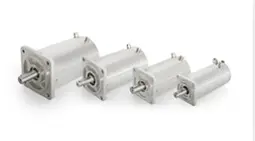
KSSM series radiation resistant servo motor
The KSSM series servo motor is a special servo motor designed for application environments such as ultra-high vacuum ultra-high tem- perature, deep low temperature, and irradiation. The shell is made of stain- less steel material and uses a rotary transformer as the motor position feedback component. Rated power of 400W, 750W.1800W, 3800W, volt- age level of 48VDC/220V AC/380VAC.
Buying a Quiet Stepper is not simply a search for the lowest decibel rating. It is a decision about movement, space, durability, and user comfort. The World Health Organization’s Global Status Report on Physical Activity 2022 estimates that 31% of adults worldwide are insufficiently active. That figure gives compact home equipment a serious role, especially where gyms are expensive or inconvenient. Yet a small footprint does not guarantee a good purchase.
ACSM’s 2025 Worldwide Survey of Fitness Trends highlights the continuing importance of wearable technology, data tracking, and practical exercise solutions. These trends matter when comparing a Quiet Stepper. Check whether resistance settings feel smooth, whether the display measures steps consistently, and whether the frame remains stable on tile or wood flooring. Sound claims deserve caution. A machine advertised as “silent” may still produce clicks, belt friction, or vibration through a thin apartment floor.
ACE Scientific Education Content Manager Chris Gagliardi offers a useful principle: “The best exercise is the one you will do consistently.” That idea should guide every global buyer. Review warranty coverage, voltage compatibility, replacement-part access, and customer support before payment. Confirm safety certifications through recognized testing organizations, rather than trusting a printed logo. Also inspect return terms. Shipping a heavy machine across borders can become costly.
These seven buying tips will examine noise, stride quality, stability, maintenance, technology, support, and total ownership cost. Some recommendations remain imperfect, because room structure and user weight change real-world results. Test carefully when possible. A quiet workout is valuable, but dependable performance matters more.
“Quiet” is relative. A practical buyer should define noise in dB(A), measured with a calibrated sound level meter. Record the distance, motor speed, load, drive current, and room background noise. Without these details, two suppliers may report numbers that cannot be compared fairly.
I once judged a stepper by its idle sound. That shortcut was wrong.
Quiet at idle.
Ask for a test under your real operating conditions: acceleration, holding force, duty cycle, ambient temperature, and mounting method. Run the motor through its normal speed range, then check both vibration and sound. A phone application can help identify unusual peaks, but it should not replace calibrated testing.
Remember that a lower dB(A) figure is useful only when the test method is transparent. If a supplier cannot explain the measurement setup, treat the specification cautiously. Your own machine may still behave differently. That is worth testing before purchase.
A quiet stepper purchase starts with the motor type. Hybrid steppers usually offer stronger holding torque and finer positioning than basic permanent-magnet designs. However, noise depends on current control, resonance, and mounting. The U.S. Department of Energy reports that electric motor systems consume about 45% of global electricity. Efficiency deserves attention, even in small machines. Compare rated current, winding resistance, and heat at the intended duty cycle. A cooler motor often runs more quietly.
Tip: Match torque at working speed, not at zero speed. Stepper torque can fall sharply as speed rises. Leave at least 30% torque headroom for friction, acceleration, and unexpected loads. A 2024 motion-control market report by MarketsandMarkets identifies precision automation as a major growth area, but market growth does not guarantee accuracy. Test the actual assembly.
Speed is only useful when motion remains stable. Check the pull-out torque curve, acceleration limits, and resonance zones. Microstepping can reduce vibration, but it does not automatically create equal mechanical accuracy. Backlash, shaft stiffness, and load inertia still matter. ISO 230-2 measurement principles emphasize repeatability and positioning accuracy under defined conditions. Ask for measured results, not only step-angle claims. One practical mistake is trusting a catalogue number too quickly. Mount the motor on the real frame, run repeated moves, and record missed steps, surface temperature, and sound level. A short test may reveal more than a perfect specification sheet.
A quiet stepper begins with the correct electrical match. Read the motor label, not only the sales page. A motor marked 24 VDC may need a driver rated for 24 volts and its peak current. Never connect it directly to an AC outlet. Check the local voltage, frequency, plug type, and grounding method. An adapter can solve voltage differences, but it cannot fix an unsuitable driver. Small errors create heat, vibration, or missed steps.
The U.S. Department of Energy’s Motor Systems Market Assessment reports that motor-driven equipment uses about 46% of electricity in American manufacturing. That figure includes larger systems, not only steppers. Still, it shows why efficiency and thermal control deserve attention. Choose a driver with current limiting, over-temperature protection, and documented EMC performance. Test the assembly under its real load. A cool bench test can mislead.
Safety paperwork also needs careful checking. IEC 60034-1 addresses rotating electrical machine requirements, while IEC 61000 standards cover electromagnetic compatibility. Product requirements differ across markets. Look for applicable CE, UKCA, UL, CSA, or equivalent certification, then verify the certificate number through the issuing organization. A printed logo proves little. Certification is not the same as quiet operation. I once underestimated cable routing; the motor passed basic testing but produced interference near a sensor. Keep power and signal cables separated, use proper shielding, and review the installation instructions twice. The second review often catches the expensive detail.
| Tip | Buying Dimension | What to Check | Reliable Data or Document | Recommended Buyer Action |
|---|---|---|---|---|
| 1 | Power and voltage compatibility | Confirm the rated input voltage, acceptable voltage tolerance, frequency, phase arrangement, and maximum current. Common single-phase supply systems include approximately 100–127 V and 220–240 V AC at 50 or 60 Hz, depending on the destination market. | Product datasheet, driver nameplate, wiring diagram, and installation manual. The motor voltage and the driver input voltage must be checked separately. | Match the complete motor–driver system to the local electrical supply. Do not connect a low-voltage DC motor system directly to mains power. |
| 2 | Noise and vibration performance | Look beyond the motor’s holding torque. Audible noise is affected by step resolution, current control, acceleration, resonance, mounting stiffness, and load. Microstepping and controlled current decay can help reduce audible resonance, but they do not guarantee silent operation. | Acoustic test method, sound-pressure level in dB(A), test distance, speed, load, mounting method, and vibration data. Results are meaningful only when test conditions are stated. | Request a sample test at the intended speed and load. Compare noise under the same mounting, acceleration, and operating-current settings. |
| 3 | Torque, speed, and thermal margin | Stepper motors generally lose available torque as speed increases. Evaluate the full torque–speed curve, acceleration torque, load inertia, duty cycle, and allowable winding temperature rather than relying only on the holding-torque value. | Torque–speed curve, motor winding resistance and inductance, rated current, thermal class, duty-cycle information, and driver current settings. | Select a system with practical torque margin at the required operating speed. Verify temperature during continuous operation and during the highest expected ambient condition. |
| 4 | Electrical safety and insulation | Check protective earthing or double-insulation design, insulation system, dielectric-strength testing, creepage and clearance, overcurrent protection, and protection against accessible hazardous voltages. | Electrical safety test report, insulation-resistance results, dielectric-withstand results, wiring diagram, protective-earth continuity record, and applicable product safety standard. | Ask whether the motor, driver, power supply, and complete machine have been evaluated as a system. Use qualified personnel for mains wiring and protective-earthing verification. |
| 5 | Ingress protection and environment | The IP code indicates protection against solid objects and water ingress. For example, IP54 provides limited dust ingress protection and protection against water splashes, while IP65 provides dust-tight protection and protection against water jets. | IP test report or certificate identifying the exact model, enclosure configuration, cable entry arrangement, test method, and test laboratory. | Choose the rating according to actual exposure to dust, moisture, oil, cleaning chemicals, and condensation. An IP rating does not by itself confirm corrosion resistance or suitability for immersion. |
| 6 | Regional compliance and certifications | Compliance requirements depend on the product configuration and destination. Common considerations may include IEC 60335-1 for certain household and similar electrical appliances, IEC 61800-5-1 for adjustable-speed electrical power drive systems, electromagnetic-compatibility requirements, RoHS substance restrictions, and local conformity-marking rules. | Declaration of Conformity, applicable test reports, EMC results, RoHS material declaration, technical file references, and certification scope showing the exact model or product family. | Identify the final machine category and import market before ordering. Treat a logo or marketing statement as insufficient unless supporting documentation is available. |
| 7 | Documentation, traceability, and after-sales support | A quiet and reliable stepper system should have consistent specifications for connector pinout, shaft dimensions, flange size, mounting pattern, cable length, firmware or drive settings, and replacement compatibility. | Controlled datasheet revision, dimensional drawing, wiring diagram, batch or serial traceability, inspection records, warranty terms, spare-parts policy, and technical-response process. | Include drawings, acceptance criteria, noise limits, electrical tests, packaging requirements, and change-notification obligations in the purchase specification. |

7 Quiet Stepper Buying Tips for Global Buyers
A quiet stepper should feel stable before it feels impressive. Check the frame welds, base joints, and pedal alignment under real body weight. Thick steel, clean seams, and tight fasteners usually indicate better build control. Ask for load testing records, material specifications, and photos from production, not only polished catalog images. Small gaps around the housing may reveal weak assembly.
Cooling deserves practical attention. A compact motor still produces heat during long training sessions. Look for ventilation paths, thermal protection, and a clearly stated duty cycle. Run the unit for at least thirty minutes, then inspect unusual warmth, odor, or changing noise. Heat tells a story. I once underestimated enclosed motor temperatures during a warehouse trial. The machine worked, but its service life became a concern.
Maintenance should be simple for overseas users. Confirm access to belts, bearings, pedals, and control cables before ordering. Request a maintenance schedule with lubricant types, tightening points, and replacement intervals. Service support matters just as much. A dependable supplier provides spare-parts lists, repair videos, multilingual manuals, and measurable response times. Clarify warranty coverage, remote diagnosis, and local technician options. Do not assume every promised part is stocked. Ask for recent fulfillment evidence and test the support channel before payment.
Recommended evaluation priorities for quiet stepper systems, based on practical purchasing factors such as vibration control, thermal management, maintenance access, and international service readiness.
Buyers should verify these factors against the actual application: low-noise operation depends on motor construction, driver current control, acceleration profiles, mounting rigidity, and operating load. Service availability and spare-part response are especially important for international installations.
7 Quiet Stepper Buying Tips for Global Buyers
Quiet operation depends on the complete motion system, not the motor alone. Ask suppliers for sound measurements at defined speeds, loads, and distances. Microstepping, current control, and mechanical damping can reduce resonance, but they may lower torque. Request test videos and factory test records. MarketsandMarkets estimated the global stepper motor market at about USD 4.8 billion in 2023, with continued growth expected through 2028. That growth makes supplier verification more important.
Compare total cost, not only the quoted unit price. Include drivers, cables, connectors, tooling, inspection, spare units, import duties, and replacement labor. A low-cost motor may need a higher-grade driver. That difference can erase the saving. Request a detailed quotation with Incoterms, packaging dimensions, payment stages, and currency assumptions. I once ignored connector costs. It was a costly oversight.
Shipping deserves its own calculation. UNCTAD reports that over 80% of global merchandise trade by volume moves by sea, so port delays can affect production schedules. Ask for both sea and air options, including insurance and customs documents. Confirm carton protection with a drop-test record or packaging specification. Warranty terms should state coverage length, exclusions, response time, and return freight responsibility. Ask how failures are diagnosed remotely. A written replacement process matters more than a generous headline period. I still underweight documentation. That mistake is easy to repeat.