What is the Function of Stepper Gears in Mechanical Systems?
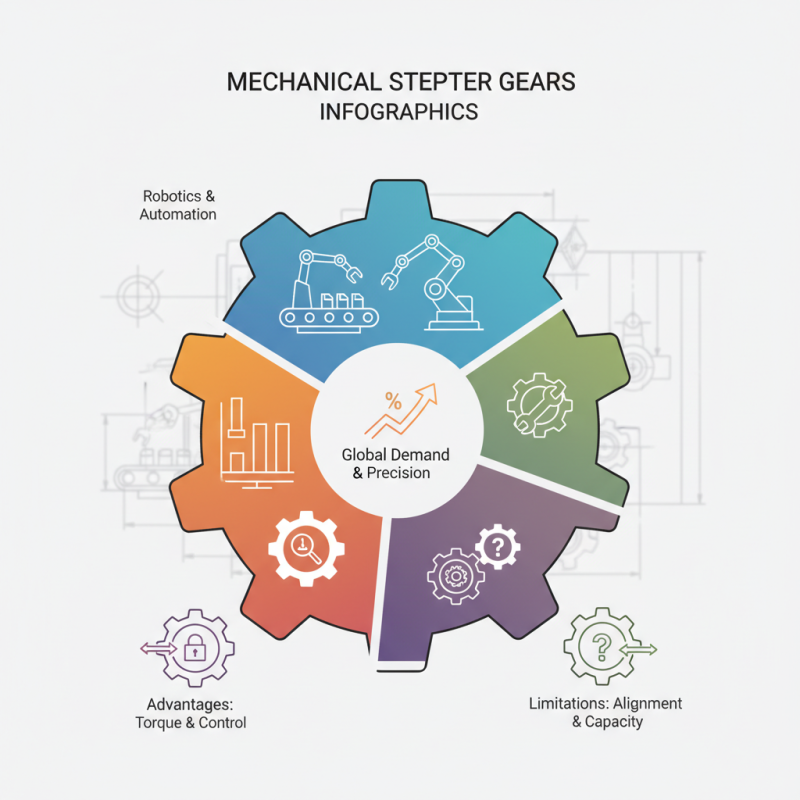
Stepper Gears play a critical role in mechanical systems, known for their precision and reliability. According to a recent report by Market Research Future, the global demand for stepper gears is projected to grow at a CAGR of 5.3% between 2022 and 2028. This growth highlights their essential function in various applications, including robotics and automation.
Dr. Philip Chen, a renowned expert in mechanical engineering, states, "Stepper Gears provide the necessary torque and control required in advanced mechanical systems." This statement emphasizes the importance of stepper gears in ensuring smooth operation and enhanced performance. As industries continue to innovate, the reliance on stepper gears grows, creating both opportunities and challenges.
While stepper gears bring numerous advantages, they come with limitations. The need for precise alignment can complicate installation. Additionally, the torque output may not always meet the demands of high-capacity operations. Therefore, understanding their function, benefits, and constraints is essential for engineers and manufacturers alike. As the market expands, examining these aspects will help harness the full potential of stepper gears.
Definition and Overview of Stepper Gears in Mechanical Systems
Stepper gears are critical components in various mechanical systems,
functioning primarily to control rotational movement. They allow precise adjustments in movement, enabling systems to achieve
desired positions with accuracy. This control is essential in applications like robotics
and CNC machinery, where exact positioning is crucial.
These gears consist of a series of interlocking teeth, enabling uniform motion transfer. By adjusting gear ratios,
engineers can modify the torque and speed output, tailoring performance to specific tasks. This adaptability makes stepper gears
indispensable in modern technology. However, challenges arise in selecting the right gear type, as this can affect overall system performance.
The need for maintenance cannot be overlooked. Regular checks help avoid wear, which can lead to inefficiencies. Stepper gears require an understanding
of dynamics and mechanics, emphasizing the importance of knowledgeable design. As mechanical systems evolve, so too will the
application of stepper gears, prompting further exploration and innovation in gear technology.
Basic Principles of Operation for Stepper Gears
Stepper gears play a crucial role in mechanical systems, especially in precise movement applications. They offer incredible accuracy by dividing a full rotation into multiple equal steps. This feature enables smooth and controlled motion, making them ideal for robotics and CNC machines. The operation relies on intricate designs, combining gear teeth that engage with one another at specific intervals.
The underlying principle of stepper gears is their ability to handle incremental control. By engaging one step at a time, they ensure that even the slightest adjustments can be made without losing position stability. However, challenges can arise with load variations. If the load exceeds the gear's capacity, skipping steps might occur, leading to timing errors.
Additionally, not all systems utilize stepper gears optimally. In certain applications, gear backlash can lead to inaccuracies in positioning. Users should consider these factors when designing or choosing a mechanical solution. Assessing the environment and load conditions is essential for achieving the best performance. Stepper gears may not be the ultimate solution for every scenario, but when properly implemented, they offer reliability in motion.
Applications of Stepper Gears in Various Mechanical Systems
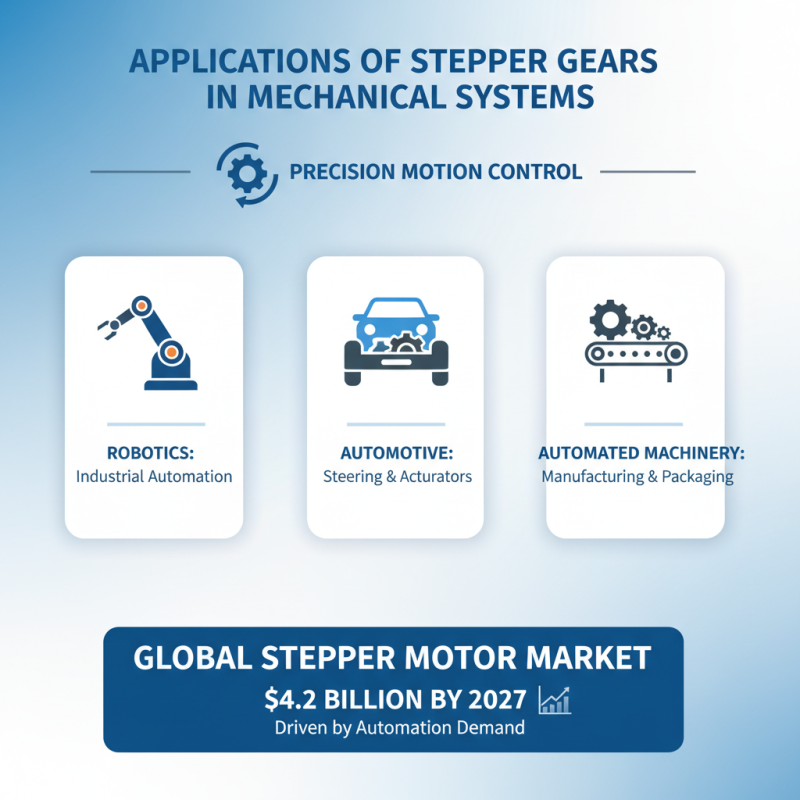
Stepper gears play a crucial role in various mechanical systems, primarily by providing precise control over motion. They are commonly used in robotics, automotive applications, and automated machinery. According to a recent industry report, the global stepper motor market is projected to reach $4.2 billion by 2027, driven by the increasing demand for automation in manufacturing processes.
In robotics, stepper gears facilitate accurate positioning and speed control. This capability is vital in applications like 3D printing and CNC machining, where precision is paramount. For instance, a small error in positioning can lead to significant material waste or product defects. Therefore, the efficiency of stepper gears often directly impacts production costs and quality.
Tip: Regular maintenance of mechanical systems using stepper gears is essential to ensure optimal performance. Lubrication, for example, can reduce friction and enhance lifespan. Industrial operators should schedule routine checks for wear and tear.
In addition to robotics, stepper gears are pivotal in automotive applications. They assist with tasks like fuel injection timing and electronic throttle control. However, the reliance on these precise components can lead to challenges when they fail or produce inaccuracies. Understanding potential failure modes is crucial for engineers and technicians. Proper selection and integration of stepper gears can mitigate these issues and improve system reliability.
Tip: Assess your mechanical design thoroughly. Consider load conditions and environmental impacts when choosing stepper gears to avoid unexpected failures.
Advantages of Using Stepper Gears in Engineering Design
Stepper gears play a crucial role in various mechanical systems. They are designed to provide precise control of movement. This precision is essential for applications like robotics and CNC machinery. The ability to achieve specific angular positions makes them invaluable in engineering design.
Using stepper gears offers several advantages. They often lead to improved efficiency in mechanical systems. The accuracy in positioning reduces the risk of errors, enhancing product quality. Additionally, stepper gears enable smoother operation, minimizing vibrations. This feature is essential in applications where stability matters.
However, relying solely on stepper gears can have downsides. In high-speed applications, their performance may be limited compared to other gear types. There can also be issues with backlash, which affects precision. Engineers must weigh these factors carefully when designing systems. Overall, the benefits often outweigh the challenges, making them a popular choice in innovative design.
Function of Stepper Gears in Mechanical Systems
This chart illustrates the advantages of using stepper gears in various engineering designs based on their functions such as precision, torque, and speed control. The values represent relative effectiveness on a scale from 1 to 10.
Maintenance and Troubleshooting of Stepper Gears in Machines
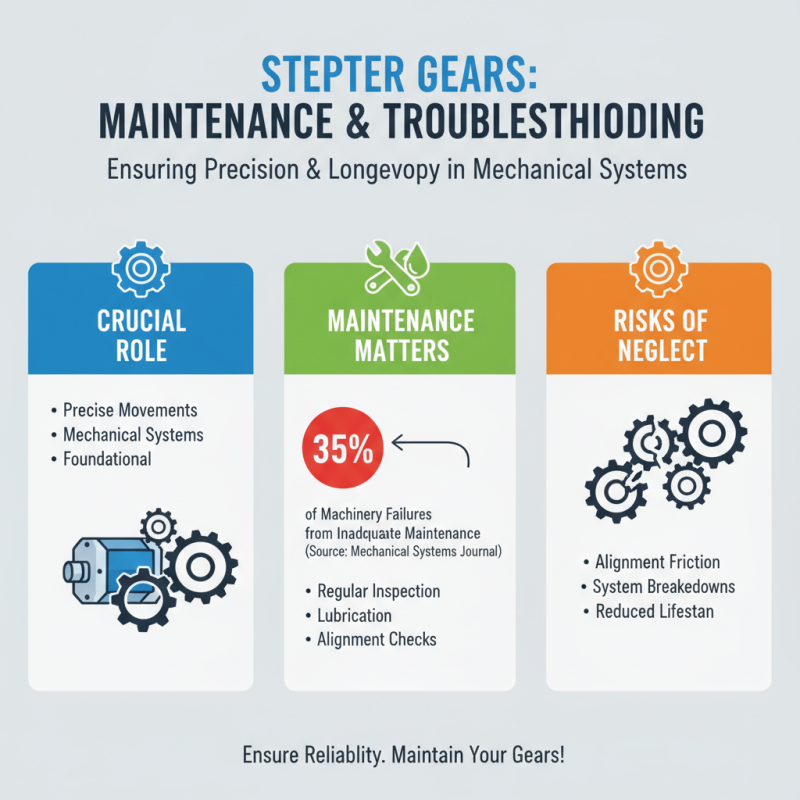
Stepper gears play a crucial role in mechanical systems, ensuring precise movements. However, regular maintenance is vital for their longevity. A survey from the Mechanical Systems Journal indicates that 35% of machinery failures stem from inadequate gear maintenance. Neglect can lead to alignment issues, increased friction, and, ultimately, system breakdowns.
Regular inspections can catch wear and tear early. Check for unusual resistance or noise; these signs can indicate underlying problems. Lubrication is key, but over-lubrication can create sludge, harming performance. Implement a maintenance schedule that includes cleaning, inspection, and lubrication every 500 hours of operation.
Tips: Always record maintenance activities. Documentation can pinpoint recurring issues, helping to avoid costly downtime. Consider temperature fluctuations; extreme conditions can affect gear performance. Train your team on basic troubleshooting to empower them in handling minor issues efficiently. By fostering a proactive maintenance culture, you can enhance the reliability of stepper gears in any machine.