China Top 10 Servo Motor Manufacturers to Know in 2026
In the rapidly evolving landscape of automation, servo motors play a crucial role. These devices convert electrical energy into mechanical movement. Their precision and efficiency significantly enhance various applications, from robotics to manufacturing. Understanding the top manufacturers in this field is vital, especially as we look toward 2026.
China is emerging as a powerhouse in servo motor production. Numerous companies are refining their technology, enhancing performance, and driving innovation. Each company has unique attributes, which contribute to its market position. Evaluating these players provides insights into trends and issues within the industry.
As we explore the top 10 servo motor manufacturers in China, it’s essential to recognize imperfections in the current market. Challenges like supply chain disruptions and evolving standards require constant adaptation. Acknowledging these factors can help companies navigate the complexities of this thriving sector.

Overview of Servo Motors and Their Importance in Automation
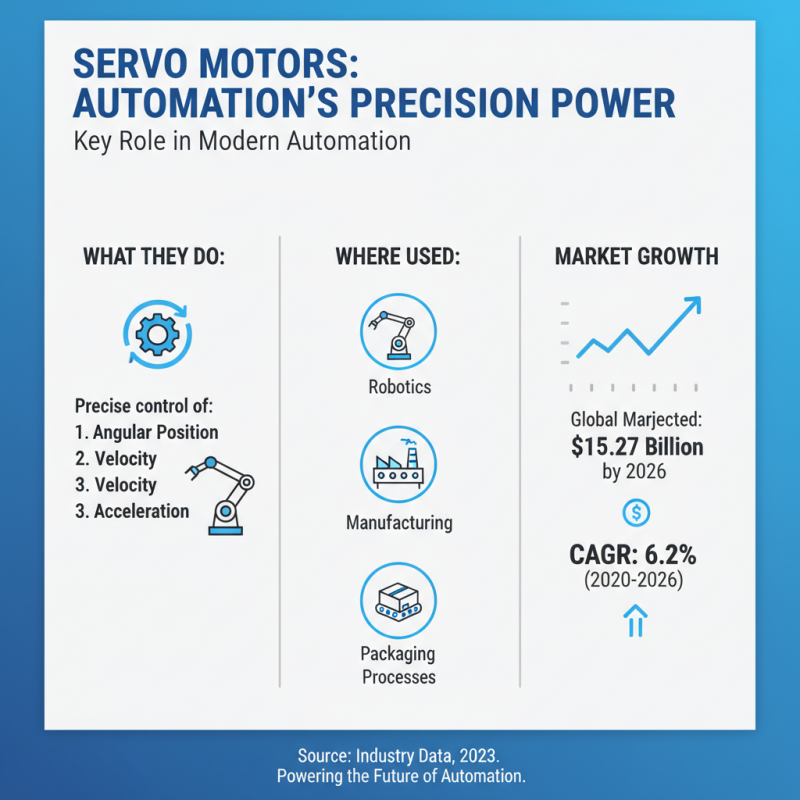
Servo motors play a crucial role in modern automation. They provide precise control of angular position, velocity, and acceleration. These motors are widely used in robotics, manufacturing, and packaging processes. According to industry data, the global servo motor market is projected to reach $15.27 billion by 2026, growing at a compound annual growth rate (CAGR) of 6.2%. This growth reflects the increasing demand for automation solutions.
The importance of servo motors lies in their ability to enhance efficiency and accuracy in operations. For instance, they can significantly reduce cycle times in assembly lines. In a survey, 80% of manufacturing companies reported improved productivity after integrating servo technology. However, challenges remain, such as high costs and the need for specialized knowledge to implement these systems effectively. Manufacturers must invest in training and support to fully leverage the benefits of servo motors.
Despite the advancements, there are concerns regarding compatibility and integration with existing systems. Many companies face difficulties in retrofitting older machines. Additionally, the rapid pace of technological change can lead to uncertainty. Businesses must continuously evaluate their automation strategies. Aligning with industry standards and keeping up with trends is essential for success in the evolving landscape of automation.
Key Factors Driving the Growth of the Servo Motor Market in China
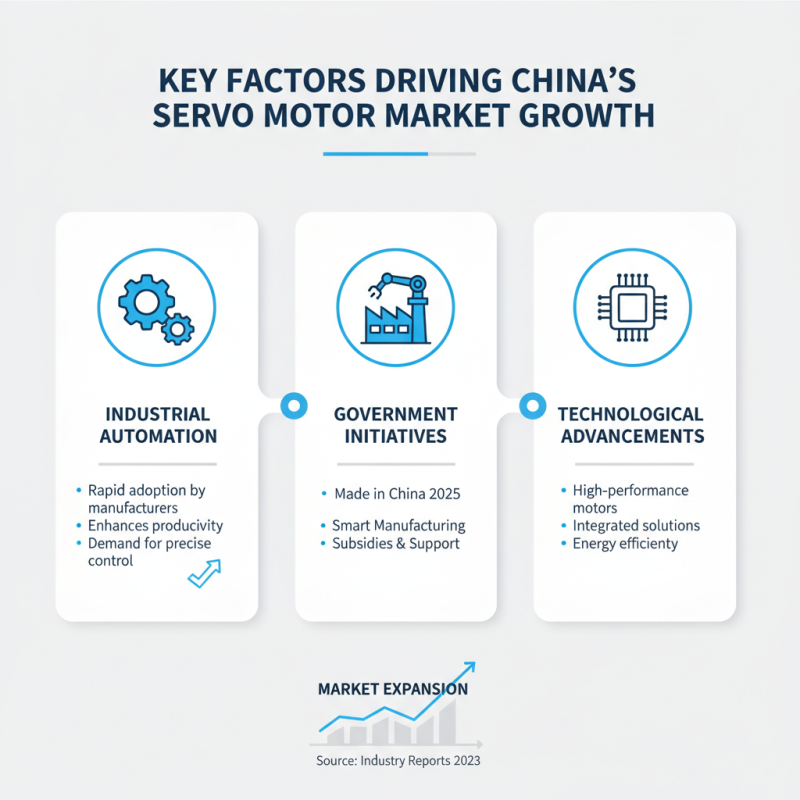
The servo motor market in China is experiencing rapid growth, driven by several key factors. Industrial automation is at the forefront of this trend. Manufacturers are increasingly adopting automation to enhance productivity. This shift creates a higher demand for precise and efficient motion control solutions. Manufacturers recognize the importance of integrating advanced servo motors into their systems.
Another influencing factor is the rise of electric vehicles. As the automotive industry transitions, servo motors play a crucial role in improving vehicle performance. While major players are expanding their capabilities, small and medium enterprises are also entering the market. This diversification fosters competition, promoting innovation. However, challenges remain. The reliance on high-quality materials can complicate sourcing and production processes.
Additionally, smart manufacturing is a game-changer. The Internet of Things (IoT) is transforming manufacturing environments. The need for real-time data analysis and automation drives the demand for advanced servo technology. As companies strive to stay competitive, the pressure to adopt cutting-edge solutions grows. It's a complex landscape, with both opportunities and obstacles to navigate as the sector evolves.
Top 10 Servo Motor Manufacturers in China for 2026: A Comprehensive Review
As we approach 2026, the landscape of servo motor manufacturing in China is evolving. The need for high-performance motors is greater than ever. Industries such as automation, robotics, and manufacturing place stringent demands on motion control. Companies need reliable and efficient solutions. This has led to increased competition among manufacturers.
Emerging players are disrupting traditional markets. They focus on innovation and adaptability. Some manufacturers are investing heavily in research and development. Others are enhancing their production techniques to improve efficiency. Quality control remains imperative. Yet, challenges persist. Some firms struggle to meet the rapid pace of technological change. This could impact their market position.
Established brands still hold significant sway. Their long-standing experience and reputation instill confidence. However, even they must evolve. The shift toward smart manufacturing demands agility. Companies that adapt may capture greater market share. Observing these trends will provide vital insights into the future of servo motor manufacturing in China. Understanding these dynamics can help stakeholders make informed decisions in this competitive landscape.
China's Servo Motor Market Overview - 2026
This bar chart illustrates the projected market share of top servo motor manufacturers in China for the year 2026. The data shows an increasing trend in market demand for servo motors, highlighting the growth potential within the industry.
Innovations and Technologies Shaping the Future of Servo Motors
The future of servo motors is being shaped by groundbreaking innovations and cutting-edge technologies. One such advancement is the integration of artificial intelligence in servo systems. AI algorithms enable smarter control, improving precision and efficiency. This trend allows for more adaptive responses during operation. Manufacturers are beginning to realize the potential of data analytics in optimizing performance. Real-time monitoring and predictive maintenance can minimize downtime.
Another emerging trend is the miniaturization of servo motors. Smaller designs do not compromise performance. This opens avenues for applications in robotics and medical technology. Compact servo motors can seamlessly integrate into tight spaces. The drive towards energy efficiency is also significant. Enhanced materials and designs improve energy consumption, leading to longer-lasting performance.
However, the rapid pace of technological changes presents challenges. Organizations need to stay updated and invest in employee training to harness these technologies effectively. Misalignment between development and market needs can result in wasted resources. Reflection on continuous adaptation is crucial. Embracing these innovations while addressing potential pitfalls will be key to success in the evolving landscape of servo motors.
Challenges and Opportunities for Chinese Servo Motor Manufacturers in 2026
In 2026, Chinese servo motor manufacturers face both significant challenges and substantial opportunities. The industry is projected to grow at a CAGR of 6.2%, driven by increasing automation in manufacturing and machine tools. This demand prompts manufacturers to innovate and improve efficiency. However, competition is fierce, not only from domestic firms but also from global players.
One challenge is the aging workforce. As experienced technicians retire, companies struggle to find skilled replacements. Additionally, reliance on traditional manufacturing methods can hinder innovation. Companies must invest in workforce training and embrace modern technologies to stay competitive.
Opportunities lie in expanding markets. The rise of electric vehicles and robotics offers new avenues for growth. The market size for servo motors in robotics is expected to exceed $25 billion by 2026. This shift requires manufacturers to adapt quickly.
Tips: Invest in talent development. Consider partnerships with educational institutions to create a skilled workforce. Emphasize research and development. Companies that innovate can carve out a significant market share. Embrace new technologies and stay agile in the evolving landscape.