Leave Your Message

Why Is Stepper Motor Repair Important?

A stepper motor can miss a position by only a few degrees, yet that small error may spoil an entire production run. Heat, worn bearings, damaged wiring, and contaminated connectors can cause missed steps, vibration, or sudden shutdowns. Stepper Motor Repair matters because it can restore dependable movement without automatically replacing a motor that may still be serviceable. The right choice depends on diagnosis, repair quality, parts availability, and the cost of downtime.

The scale of motor use makes maintenance an operational issue, not a minor workshop task. The International Energy Agency estimates that electric motor-driven systems account for about 45% of global electricity consumption. That figure covers many motor types, not stepper motors alone, but it shows why efficiency and reliability deserve attention. In a 2019 study, the Electrical Apparatus Service Association and the Association of Electrical and Mechanical Trades found that properly performed motor repairs can preserve efficiency. Repair is not always the answer. A badly damaged motor, or one without suitable replacement parts, may be better replaced.

John Malinowski, a motor-industry specialist, has emphasized lifecycle performance over purchase price in his industry guidance. In paraphrase: “A motor’s value depends on reliable service over time, not just its initial cost.” That principle is useful when evaluating a stepper motor repair. Ask for measured winding resistance, insulation checks, and a test under realistic load. A clean bench test is encouraging, but it may not reveal a fault that appears after hours of operation. Repair decisions deserve evidence—and a little humility.

Why Is Stepper Motor Repair Important?

How Stepper Motors Support Precise Motion Control

Why Is Stepper Motor Repair Important?

How Stepper Motors Support Precise Motion Control

Stepper motors move in measured increments, making them useful where position must be controlled repeatedly. In a small packaging machine, for example, the motor may advance a belt a few millimeters at a time. The controller sends pulses, and the motor turns in response. That apparent simplicity depends on healthy windings, sound bearings, and a stable connection to the load.

Small errors matter. Worn bearings can add friction, while loose couplings may cause the motor shaft and mechanism to drift out of alignment. A damaged cable or overheating winding can also lead to missed steps. Because many stepper systems do not report position directly, the controller may continue operating without noticing the error. A tray can then stop slightly off-center, or a tool can begin a pass in the wrong place.

Repair helps restore consistent motion, but replacing a part alone may not solve the underlying issue. A careful check should include shaft movement, wiring, driver settings, mounting, and the machine’s load. Heat leaves clues. So can unusual noise or uneven movement. After repair, testing at realistic speeds and loads is important; a motor that turns smoothly with no load may still struggle in service. And precision is not perfect by default. Alignment and calibration deserve another look.

Common Problems That Require Stepper Motor Repair

A stepper motor may need repair when it skips steps, stalls, or loses position during a move. A machine might command a steady rotation, yet the shaft jerks or stops under load. That matters. These symptoms can come from worn bearings, a damaged shaft, loose connections, or an incorrect driver current setting, so checking the full system is essential.

Listen closely. A persistent buzz, grinding sound, or unusual vibration can point to mechanical wear or misalignment. Heat is another warning sign: a motor that becomes unusually hot may have damaged windings, poor ventilation, excessive load, or a control issue. Discoloration around the case or a burnt odor needs prompt inspection. Still, warmth alone does not prove the motor has failed; stepper motors can run hot during normal operation.

Visible damage, rough shaft movement, and inconsistent resistance between winding pairs can also indicate a repair is needed. A technician can inspect bearings, wiring, insulation, and the rotor, then compare electrical readings with the motor’s specifications. The tricky part is that a failing cable or driver can mimic motor damage. Replacing the motor too early wastes time and may leave the original fault untouched. Even experienced technicians can misread a symptom when the machine’s load changes from one cycle to the next.

How Repair Restores Motor Accuracy and Reliability

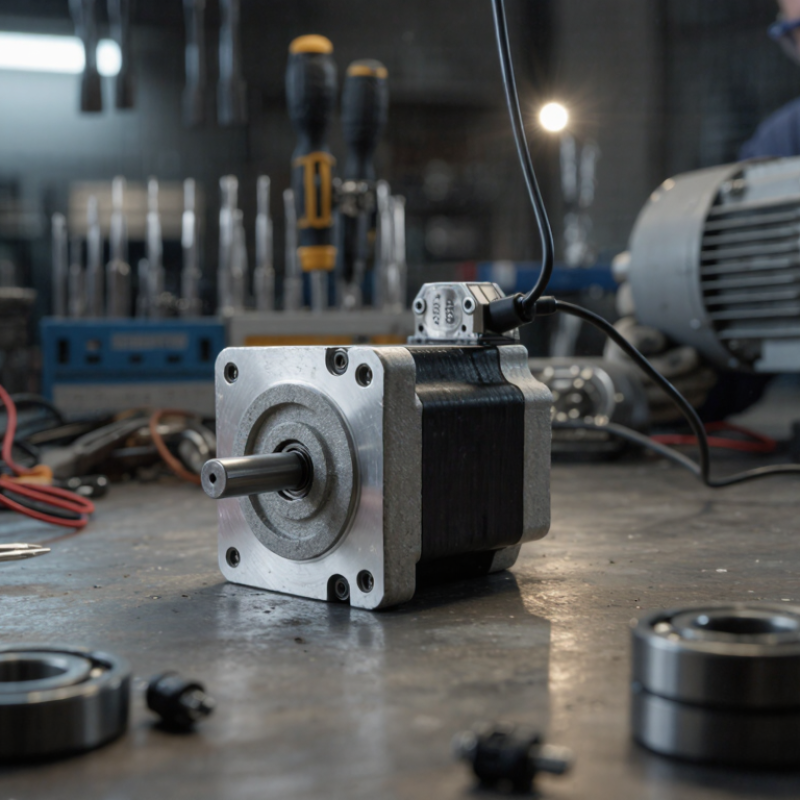
Stepper motor repair restores accuracy by correcting the small faults that cause missed steps, vibration, and uneven motion. A worn bearing can add drag. Loose terminals or damaged insulation can interrupt current through a winding. Technicians inspect the shaft, bearings, connectors, and coil resistance, then compare measured values with the motor’s specifications. After repair, they test movement across the operating range. A motor that turns smoothly by hand may still lose position under load. Testing matters.

Repair can also improve reliability by addressing heat and mechanical wear before they trigger repeated stoppages. The U.S. Department of Energy’s Operations & Maintenance Best Practices guide estimates that effective maintenance programs can save 5–20% in energy costs compared with reactive maintenance. That figure covers facilities broadly, not stepper motors alone, but it shows how preventive work can reduce avoidable operating losses. Repair is not a magic reset. Poor alignment or an incorrect current setting can undo careful work.

A useful service record includes coil readings, bearing condition, test load, and observed positioning error. Small details count. A technician may need to check whether the motor holds position after warming up, not just during a brief bench test. Sometimes, the original fault is not fully clear. That uncertainty should be recorded, then checked again after the motor returns to service.

The Risks of Delaying Stepper Motor Repairs

A stepper motor rarely fails without warning. A faint clicking sound, uneven movement, or extra heat near the housing can signal a developing problem. When repairs are postponed, a small fault may place added stress on the motor driver, couplings, or connected machinery. That matters. A machine that once moved smoothly may begin missing steps, stopping unexpectedly, or producing parts outside their required dimensions.

Delay can also make diagnosis harder. Heat may damage insulation over time, while loose connections can create intermittent faults that are difficult to reproduce. In a production setting, an unexpected shutdown can disrupt schedules and require checks across the entire motion system. Small signs count. Record when symptoms occur, note unusual sounds, and compare motor temperature with normal operating conditions. These observations help a qualified technician distinguish motor wear from problems in wiring, load, or control settings.

Not every warm motor needs replacement, and guessing can lead to unnecessary work. Still, continuing to operate equipment with repeated stalls or a burning smell is a poor risk. Stop the machine when symptoms suggest overheating, then inspect it using the equipment’s service procedures. Even experienced maintenance teams can miss an early clue when the line is busy; that is worth admitting. A timely inspection may prevent a minor repair from becoming a broader outage.

When Repair Is Preferable to Motor Replacement

Why Is Stepper Motor Repair Important?
When Repair Is Preferable to Motor Replacement

Repair can make more sense when a stepper motor has a localized fault, such as a damaged cable, worn bearing, or loose connector. These faults may cause missed steps, rough movement, or excess heat. If the rotor and stator remain sound, replacing the faulty part can preserve the motor’s mounting, wiring, and motion settings. Less reconfiguration matters on equipment where alignment is fussy. Small details count.

A repair decision should follow inspection, not habit. Check winding resistance, insulation condition, shaft play, and operating temperature, then compare repair cost and downtime with replacement. The U.S. Department of Energy reports that motor-driven systems use about 68% of electricity consumed by U.S. industry. That figure covers many motor types, not steppers specifically, but it underlines why inefficient or overheating equipment deserves attention. EASA and AEMT’s 2003 study examined 23 repaired industrial induction motors and found that repair quality matters; its results should not be treated as stepper-motor data. I would not use a single cost threshold for every case. If windings are burnt, the shaft is badly damaged, or the motor repeatedly fails, replacement may be the safer choice. Repair is preferable when testing identifies a limited fault and the repaired unit can meet its original operating requirements.

Why Is Stepper Motor Repair Important? — When Repair Is Preferable to Motor Replacement

Decision factor Repair is often preferable when… Replacement is often preferable when… Why it matters
Fault is clearly identified Testing points to a serviceable issue, such as a worn bearing, loose connection, or damaged cable. The fault is intermittent or unexplained after appropriate checks, or multiple internal components are damaged. A diagnosis helps avoid replacing a motor when the actual problem is in the wiring, power supply, or drive.
Mechanical condition The shaft, rotor, and housing are in good condition, and the problem is limited to replaceable mechanical parts such as bearings. The shaft is bent, the rotor or stator is damaged, or the motor has severe corrosion or physical deformation. Major structural damage can make dependable repair difficult or uneconomical.
Windings and insulation Electrical tests indicate a localized, repairable connection issue and the winding insulation remains sound. Windings are burned, shorted, or have insulation damage that cannot be reliably restored. Stepper motors rely on correctly functioning phase windings to produce controlled movement and torque.
Performance requirements The repaired motor can meet the machine’s required torque, speed, positioning, and duty cycle. The application now requires different torque, speed, accuracy, size, or environmental protection. Repair restores condition; it does not change a motor’s fundamental design ratings.
Compatibility and availability The motor has a non-standard frame, shaft, mounting pattern, connector, or electrical specification that is difficult to match. A compatible replacement is readily available and fits the machine without extensive redesign or reconfiguration. Keeping the original motor can reduce integration work, but replacement may be simpler when compatibility is straightforward.
Downtime and total cost Repair can be completed sooner or at lower total cost, including diagnosis, labor, parts, testing, and downtime. Repair parts or specialist labor are costly or delayed, while a suitable replacement can be installed and tested sooner. Compare the full cost and expected downtime, not just the price of a replacement motor or repair part.
Repeat failures The cause is understood and can be corrected, such as contamination, misalignment, excessive load, or poor cooling. The motor has repeated failures despite correcting operating conditions, or reliability requirements cannot be met after repair. A repair that does not address the underlying cause may only postpone another failure.
Verification after work The motor can be inspected and tested for phase continuity, insulation condition, smooth rotation, and operation with its drive. The repair cannot be adequately tested, or the motor remains noisy, overheats, loses steps, or performs inconsistently. Post-repair testing helps confirm safe, reliable operation before the motor returns to service.

Practical rule: diagnose the motor, wiring, power supply, and drive together before deciding. Choose repair when the fault is limited and verifiable; choose replacement when damage is extensive, performance requirements have changed, or a dependable repair is not practical.