Understanding Vacuum Servo Motor Applications and Benefits?
In the realm of modern automation, the Vacuum Servo Motor has emerged as a crucial component. Its applications span various industries, from automotive to packaging. Understanding this technology can unveil numerous benefits.
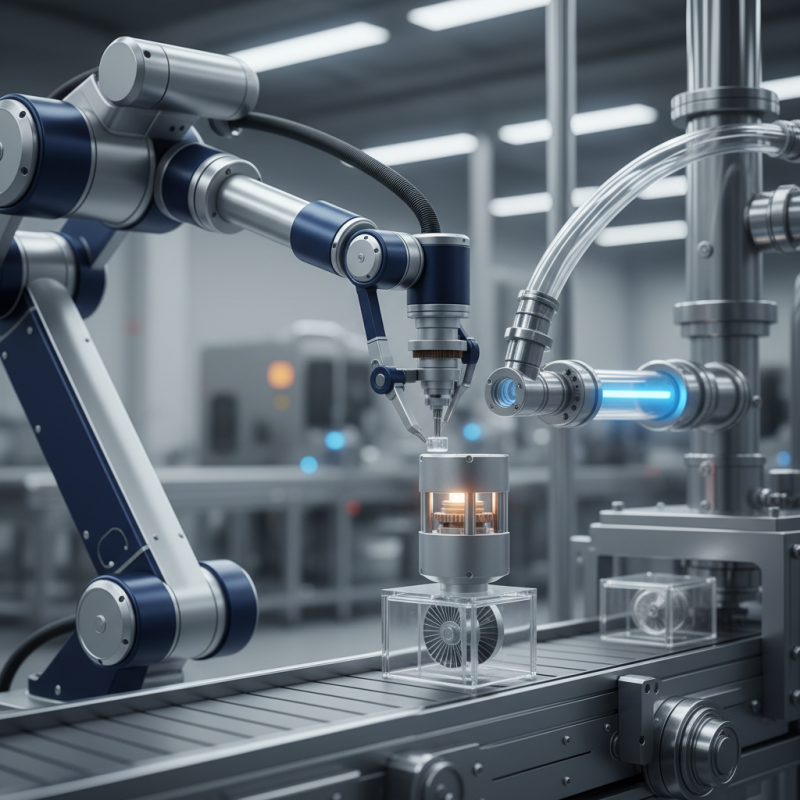
The core function of a Vacuum Servo Motor lies in its ability to provide precise control. This is essential for tasks that demand accuracy and speed. For instance, in robotic arms, it ensures smooth movements, enhancing productivity. Yet, not all systems effectively integrate this technology. Challenges can arise, such as compatibility issues or maintenance needs.
Analysing the advantages reveals its importance. The Vacuum Servo Motor not only improves efficiency but also reduces operational costs. Effective performance often requires delicate calibration. Embracing these motors will lead to significant improvements in various applications, but it demands thoughtful implementation.
Applications of Vacuum Servo Motors in Various Industries
Vacuum servo motors find widespread use across various industries due to their efficiency and reliability. In automotive applications, they help control braking systems. These motors leverage vacuum pressure, making them lightweight and effective. Many vehicles rely on this technology for improved safety and performance.
In the packaging industry, vacuum servo motors streamline operations. They are essential in automated packaging machines. These motors ensure precise movement and control during the packaging process. Many companies see a marked increase in productivity through their use. However, integrating these motors can sometimes cause unexpected challenges, like alignment issues.
Another notable application is in medical devices. Here, vacuum servo motors assist in critical processes, such as in surgical equipment. Consistency and precision are vital in this industry. Yet, the need for regular maintenance can lead to downtime. Striking a balance between efficiency and reliability is an ongoing pursuit.
Applications and Benefits of Vacuum Servo Motors in Various Industries
Key Benefits of Using Vacuum Servo Motors in Automation
Vacuum servo motors are gaining attention in automation. They offer substantial benefits that can enhance operational efficiency. One key advantage is their ability to provide precise control. This leads to improved accuracy in tasks like assembly and packaging.
Another benefit is their energy efficiency. Vacuum servo motors consume less power than traditional motors. This helps reduce operational costs significantly. When integrated into existing systems, they can optimize energy use without compromising performance.
Tips: Remember to evaluate the specific application before selecting a vacuum servo motor. Consider factors like load requirements and cycle times. Regular maintenance is also vital to ensure optimal performance. Neglecting this can lead to reduced efficiency over time. Keep a close eye on the motor's performance metrics to identify any potential issues early.
Operational Principles of Vacuum Servo Motors Explained
Vacuum servo motors are integral in various applications, including automation and robotics. These motors operate based on the principles of vacuum pressure. This mechanism utilizes atmospheric pressure to create controlled motion. When a vacuum is applied, the motor component moves efficiently. The response time can be very quick, often below a second, making them ideal for dynamic environments.
When looking at performance metrics, reports indicate that vacuum servo motors offer up to 25% energy savings compared to traditional motors. They can handle loads efficiently while providing precision control. However, not all systems may be optimized for vacuum operations. Maintenance, for instance, can sometimes be overlooked. A lack of understanding of vacuum integrity can lead to performance loss. Proper sealing and regular checks are essential to avoid inefficiencies.
Moreover, integration challenges can arise in complex systems. While vacuum servo motors offer great benefits, they need the right setup and environment. Sometimes, a straightforward installation doesn't suffice. Users must be prepared to adjust their setups for optimal performance. These technologies require investment and a willingness to adapt. In high-demand sectors, the rewards can outweigh the challenges if implemented thoughtfully.
Understanding Vacuum Servo Motor Applications and Benefits
| Application Area |
Key Benefits |
Operational Principle |
Efficiency Rating |
| Automotive Applications |
Improved response time, reduced weight |
Utilizes vacuum pressure to control motion |
85% |
| Robotics |
Precision control, high speed |
Actuates using atmospheric pressure differentials |
90% |
| Industrial Automation |
Reliability, lower maintenance |
Employs vacuum for consistent force application |
88% |
| Packaging Systems |
Compact design, energy-efficient |
Operates on vacuum to engage mechanisms |
92% |
| Aerospace |
Enhanced performance under varying conditions |
Relies on vacuum to optimize functionalities |
87% |
Comparative Analysis: Vacuum Servo Motors vs. Other Actuation Systems
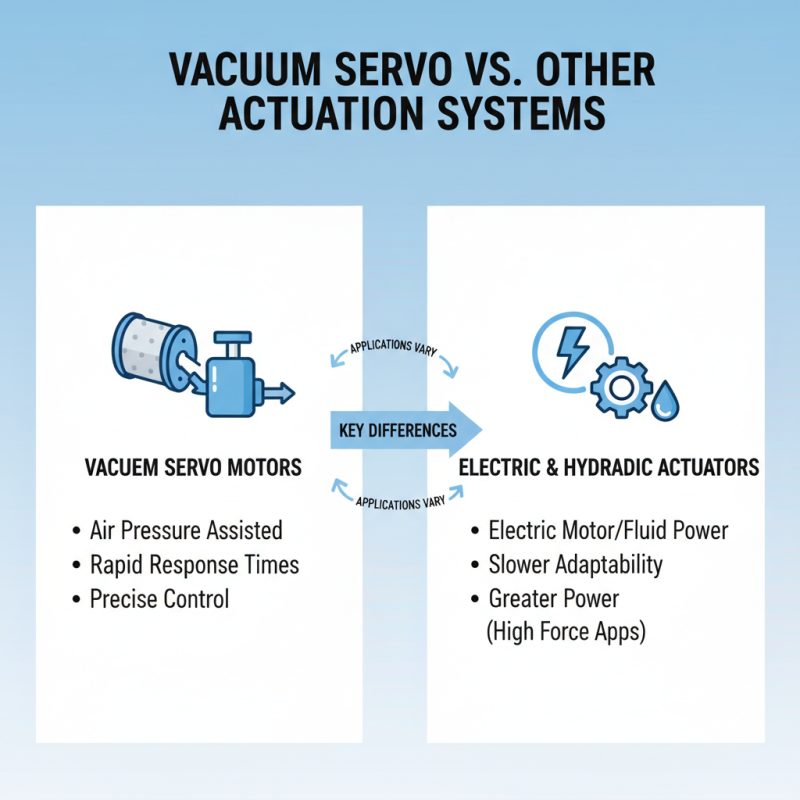
When comparing vacuum servo motors to other actuation systems, distinct differences emerge. Vacuum servo motors utilize air pressure to assist in movement. This leads to rapid response times and precise control. Other systems, such as electric or hydraulic actuators, often lack this quick adaptability. However, these alternatives can offer greater power in certain applications.
Vacuum servos excel in environments where compact size and weight are critical. They often fit seamlessly in tight spaces. However, their reliance on a vacuum source can limit some designs. If a vacuum fails, performance drops significantly. On the other hand, electric motors provide consistent power without such dependency. Yet, they may require more space and can be heavier.
The efficiency of vacuum servo motors in specific tasks is noteworthy. They are well-suited for applications like robotics and automotive systems. Their precise movements can enhance overall performance. Still, understanding the limitations is crucial. Each system has its strengths and weaknesses. Designers must weigh considerations when choosing the right actuation method.
Future Trends and Innovations in Vacuum Servo Motor Technology
Vacuum servo motor technology is evolving rapidly. Recent innovations focus on improving efficiency and precision. These motors are becoming smaller yet more powerful. Compact designs allow for easier integration into various applications. As industries demand better performance, engineers are pushed to innovate.
Future trends point toward smarter systems. Machine learning and AI may play significant roles in motor control. This could enhance response times and adaptability. Imagine a vacuum servo that learns from its environment. That could redefine automation. However, with enhanced capabilities comes the need for better safety measures.
Sustainability is also becoming a priority. Manufacturers are exploring eco-friendly materials. The goal is to reduce waste and energy consumption. While progress is evident, challenges remain. Some technologies may not be fully matured yet. The road to innovation is often rocky, and reflection on past errors is essential for growth.