China Top Motor Moving Manufacturers for Global Buyers
China’s motor manufacturing sector has become a critical link in global industrial supply chains. For buyers evaluating Motor Moving manufacturers, price alone is an incomplete measure. Performance depends on torque consistency, insulation quality, bearing life, noise control, and delivery discipline. A motor may look impressive on paper, yet fail after months of heat, vibration, or continuous operation.
The International Energy Agency’s Global EV Outlook 2024 reported that global electric car sales approached 14 million in 2023, with China representing about 60% of those sales. This expansion increases demand for traction motors, gear motors, servo systems, and customized drive assemblies. The report also highlights China’s expanding role in electric mobility manufacturing. Fatih Birol, IEA Executive Director, stated, “The global electric car market is experiencing exponential growth.” That momentum affects every serious Motor Moving sourcing decision.
Standards still matter. Buyers should examine ISO 9001 procedures, IEC 60034 compliance, efficiency data, factory testing, and traceable component records. On-site audits can reveal details that brochures omit, including loose terminals, crowded workstations, or incomplete test logs. Supplier comparisons should also include sample approval, spare-part support, warranty response, and export experience.
No supplier is perfect. Even reputable factories can miss a delivery window or revise a component unexpectedly. Therefore, this guide focuses on evidence rather than promotional claims. It compares China’s leading Motor Moving manufacturers through technical capability, production experience, quality controls, and communication reliability. Readers should still verify certificates, test reports, and contractual terms before placing an order. Small checks prevent expensive surprises.
What Defines China’s Motor Moving Manufacturing Industry
China Top Motor Moving Manufacturers for Global Buyers
What Defines China’s Motor Moving Manufacturing Industry
China’s motor manufacturing industry is defined by scale, dense supply chains, and fast engineering cycles. The China Association of Automobile Manufacturers reported 30.16 million vehicle units produced in 2023. This large domestic market supports demand for traction motors, drive systems, testing equipment, and precision components.
Scale matters, but it is not enough.
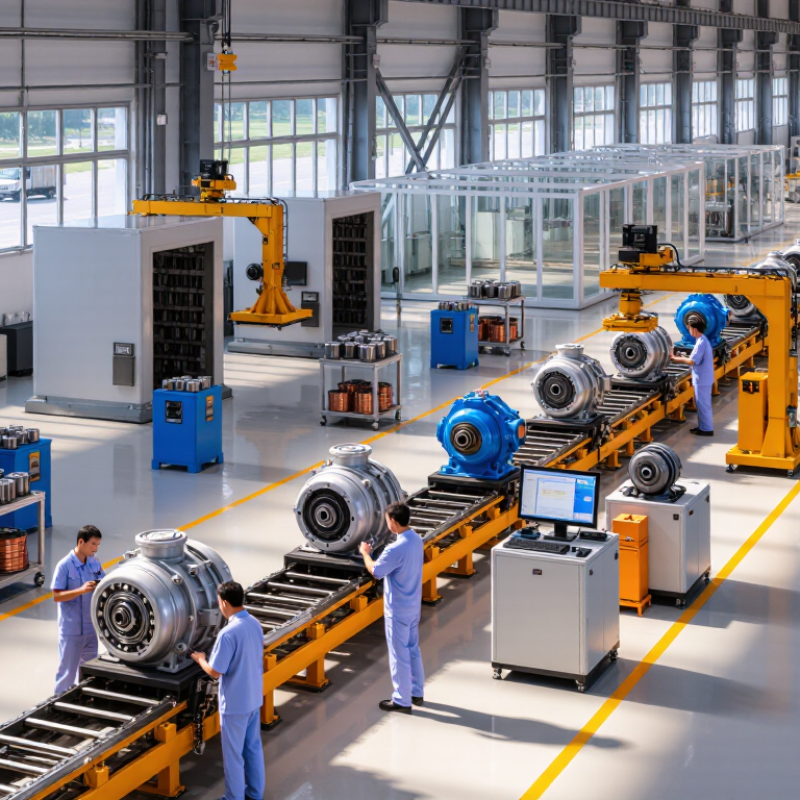
The International Energy Agency reported that global electric car sales exceeded 17 million units in 2024. This growth increases pressure on Chinese manufacturers to improve motor efficiency, thermal control, noise reduction, and production consistency. In factory visits, buyers often notice practical details first: clean winding lines, traceable copper wire, calibrated torque tools, and clearly marked inspection stations. These details reveal process discipline better than impressive brochures.
Export-oriented manufacturers also depend on measurable reliability. ISO-based quality systems, end-of-line testing, vibration analysis, and material traceability help reduce uncertainty for overseas buyers. However, documentation can still vary between factories. Some suppliers provide detailed test curves; others offer only basic efficiency figures. That gap deserves attention. Buyers should request sample reports, load testing records, warranty terms, and independent verification before placing large orders. The industry is advanced, yet not perfectly uniform.
How Chinese Manufacturers Design and Produce Motor Moving Systems
Chinese manufacturers design motor moving systems around load, speed, duty cycle, and installation conditions. The process usually starts with torque calculations and movement simulations. Engineers then select motors, gearboxes, rails, sensors, and control units. A 120-kilogram load needs more than a powerful motor. Acceleration, friction, vibration, and emergency stopping also matter.
The International Energy Agency has reported that electric motor systems consume roughly 40% of global electricity. This figure makes efficiency a design priority, not a marketing detail. Manufacturers commonly use high-efficiency motors, variable-speed control, and automatic standby functions. IEC 60034-30-1 provides efficiency classifications for many motor types. In production, technicians check winding resistance, insulation strength, noise, temperature rise, and repeated movement accuracy. A practical factory test may run the system thousands of cycles before shipment.
Small details often reveal engineering quality.
Cable paths need protection from bending. Rail joints must remain smooth after installation. Controllers should record fault conditions clearly. A prototype can pass a bench test and still perform poorly in dust, humidity, or uneven mounting conditions. That lesson deserves attention. According to the IEA’s Energy Efficiency reports, system-level optimization often delivers greater savings than replacing one component alone. Chinese factories increasingly combine CNC machining, automated assembly, and traceable inspection records, but consistency between batches still requires human review. Cost pressure can encourage shortcuts, especially during custom projects. Reliable suppliers therefore verify drawings, sample units, and final test data before mass production.
How to Evaluate and Select a Reliable Chinese Manufacturer
Selecting a Chinese motor manufacturer requires more than a polished factory video.
China’s manufacturing scale is significant. UNIDO’s 2024 Industrial Development Report attributes about 31.6% of global manufacturing value added to China in 2023.
Scale helps, but it does not guarantee winding quality, bearing life, or delivery discipline. The IEA’s Global EV Outlook 2024 reports that China produced more than half of the world’s electric cars in 2023. This signals strong engineering capacity, not automatic suitability for every motor application.
Request traceable evidence before discussing price.
Ask for datasheets, test reports, process-control records, and sample serial numbers. Verify rated output, efficiency, insulation class, ingress protection, noise, temperature rise, and duty cycle against recognized IEC requirements. An independent laboratory should repeat critical tests on production samples, not only prototypes. Ask for the corrective-action record. It can reveal more than a certificate.
Audit the factory’s actual production line.
Watch copper-wire storage, rotor balancing, varnish curing, final inspection, and packing conditions. Confirm how suppliers manage material changes and rejected units. ISO 9001 certification supports process discipline, but the certificate alone is weak evidence. No checklist is perfect. Score capacity, technical communication, after-sales response, and shipment history separately. A low quotation may hide tooling gaps or unstable subcontracting. Request a pilot order with clear acceptance limits and independent pre-shipment inspection. Leave room for doubt.
A reliable supplier welcomes measurable scrutiny, while buyers should revisit assumptions after the first batch.