Top 10 Insights on the Rear Mirror Test and Its Significance?
The introspection provided by the "Rear Mirror Test" offers invaluable insights into our decision-making processes. This concept encourages individuals and organizations to reflect on past actions. By looking backward, we can identify patterns and lessons that shape our future. Through this lens, we recognize both successes and failures.
The significance of the Rear Mirror Test lies in its ability to foster critical thinking. It urges us to analyze previous outcomes and derive meaningful lessons. This examination can feel uncomfortable. However, it is essential for growth and progress. Acknowledging mistakes is a vital step toward improvement.
In an ever-evolving world, the Rear Mirror Test remains relevant. It prompts us to consider whether our previous choices align with our current goals. Are we repeating past errors? Are we truly learning from our experiences? Reflecting on these questions helps us build a clearer path forward.

Understanding the Concept of the Rear Mirror Test in Decision-Making
The Rear Mirror Test serves as a crucial tool in decision-making. It encourages leaders to reflect on past choices. This reflective process allows individuals and organizations to evaluate previous actions, fostering accountability. By looking into the metaphorical rear mirror, we can identify patterns that shaped outcomes. Recognizing mistakes is essential. This awareness can guide future behavior and strategies.
Decision-making often lacks clarity, leading to uncertainty. The Rear Mirror Test brings focus. It emphasizes the lessons learned from past experiences. Leaders may uncover blind spots, revealing areas needing improvement. Engaging in this introspection requires honesty and courage. Reflecting on unsuccessful projects can be uncomfortable. Yet, it's essential for growth.
Employing this test helps bridge the gap between theory and practice. It embodies the principle of learning from history. The Rear Mirror Test clarifies the impact of decisions. This insight cultivates a culture of learning. It empowers organizations to adapt and evolve. Embracing this concept can redefine decision-making frameworks. Acknowledging imperfections creates a pathway for innovation. Reflecting means growing; it’s a continuous journey toward better choices.
Historical Context and Development of the Rear Mirror Test Framework
The Rear Mirror Test framework offers a unique perspective on evaluating past decisions and actions. Developed originally as a metaphor in both personal and professional contexts, it encourages individuals to reflect on their choices critically. This framework emerged from the need for better self-assessment tools in leadership and management, allowing leaders to gauge their decision-making over time.
Historically, the concept was influenced by various fields, including psychology and business management. It emphasizes learning from past mistakes rather than merely glossing over them. Many experts argue that without this reflection, growth is stunted. The test urges individuals to confront uncomfortable truths about their past decisions. When practitioners apply it rigorously, they can uncover blind spots in their judgment.
The significance of this framework lies in its honest approach. It recognizes that while success can be instructive, failures often carry more weight. Each insight gained can be shaped into actionable steps for future improvement. Engaging with the Rear Mirror Test can highlight patterns and behaviors that were previously ignored, prompting deeper self-awareness.
Key Psychological Insights Derived from the Rear Mirror Test
The Rear Mirror Test provides valuable psychological insights into our decision-making processes. When reflecting on past choices, we often uncover patterns of behavior. This test encourages self-examination, revealing inconsistencies between our values and actions. Such reflections can lead to personal growth and better future decisions.
Emotions play a crucial role in this test. Individuals often experience regret or pride when evaluating past actions. These feelings act as powerful motivators for change. For instance, a moment of reflection may reveal that comfort often trumps ambition, leading to a re-evaluation of one's goals.
The test's significance lies in the opportunity it presents for deeper understanding. While our past choices shape us, they can also limit us. Acknowledging mistakes is uncomfortable but essential. It pushes us to confront truths we might prefer to ignore. In this way, the Rear Mirror Test becomes a tool for both analysis and action, guiding us toward more authentic lives.
Practical Applications of the Rear Mirror Test in Everyday Life
The Rear Mirror Test offers valuable insights into our daily decision-making. By reflecting on past experiences, we can gain clarity on what truly matters. This process helps identify patterns. It’s not just about successes; failures teach us as much, if not more.
In everyday life, we often rush into choices without thinking. The Rear Mirror Test encourages us to pause. For example, before making a career move, consider previous jobs. What worked? What didn’t? An honest self-examination reveals hidden lessons. Embracing vulnerability is key.
Mistakes are part of the journey. Instead of avoiding them, we should analyze them. This reflection leads to growth. The Rear Mirror Test isn’t about perfection; it’s about progress. Use it to shape better futures and enhance personal development.
Top 10 Insights on the Rear Mirror Test and Its Significance
Implications of the Rear Mirror Test for Future Planning and Goals
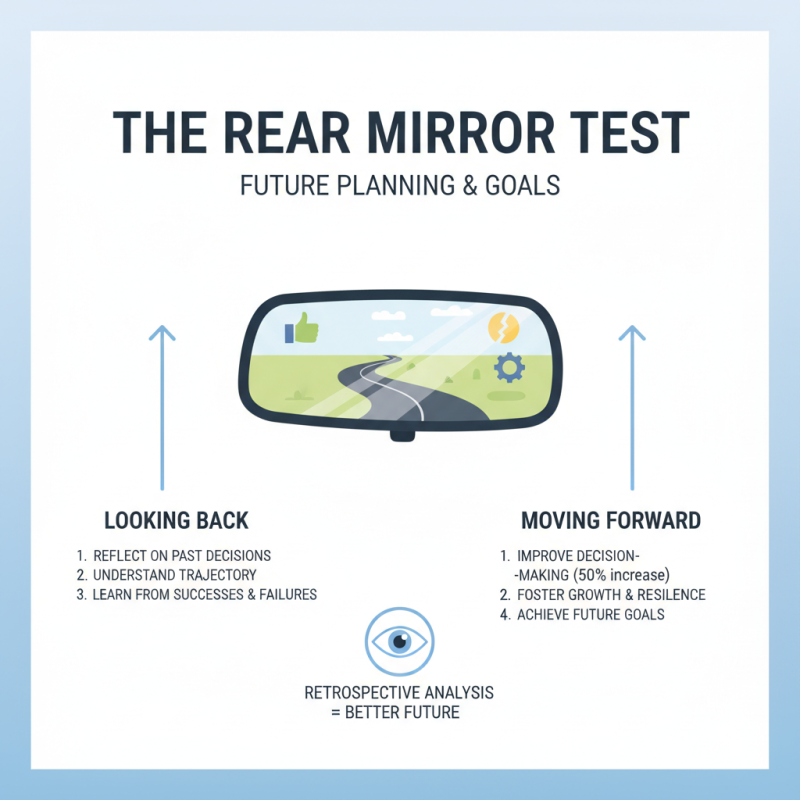
The Rear Mirror Test encourages reflection on past decisions. This practice can help individuals and organizations understand their trajectory. Studies indicate that leaders who engage in retrospective analysis improve decision-making by 50%. It’s not just about assessing successes but also about learning from failures. Acknowledging missteps fosters growth and resilience.
When considering future planning, insights from past experiences are invaluable. According to a 2023 survey, 70% of organizations that analyze their historical performance achieve better strategic alignment. This shows the importance of context in shaping goals. By evaluating past outcomes, businesses can set realistic targets and identify potential pitfalls. However, many still hesitate to confront uncomfortable truths. Embracing this unease is essential for meaningful progress.
The Rear Mirror Test highlights a crucial lesson: learning is iterative. For effective future planning, organizations must regularly reflect and adapt. Ignoring past lessons can lead to repeated mistakes. As the landscape continues to evolve, those who prioritize reflection will have a competitive edge. This ongoing commitment to learning ensures resilience in an unpredictable world.