2026 Top Electric Stepper Motor Types for Buyers
Choosing among electric stepper motors in 2026 requires more than comparing torque figures. Buyers must examine load inertia, holding torque, speed range, driver compatibility, heat, noise, and expected duty cycle. A motor that performs smoothly on a laboratory bench may lose accuracy inside a warm, dusty machine.
Market research confirms sustained demand. Grand View Research’s Stepper Motor Market Analysis, 2024–2030, identifies automation, robotics, medical equipment, and industrial machinery as important growth areas. MarketsandMarkets also forecasts continued expansion, although its estimates differ by application and motor category. These differences matter. Forecasts are useful signals, not purchasing instructions.
Takashi Kenjo, a leading stepper-motor researcher and author, defines the principle simply: “A stepping motor is a motor that rotates in steps.” That definition remains practical for buyers. Each step represents controlled movement, but real positioning depends on the driver, mechanical coupling, friction, and acceleration profile. The best choice is rarely the largest motor. It is the motor that maintains usable torque without excessive heat or missed steps.
This guide compares the main Stepper Electric types, including variable-reluctance, permanent-magnet, hybrid, geared, linear, and integrated designs. It considers where each type works well, where it struggles, and what specifications deserve closer inspection. Some conclusions may remain imperfect because manufacturers test under different conditions. That is precisely why buyers should verify published data with prototype testing, thermal checks, and the actual machine load.
What Electric Stepper Motors Are and How They Operate
An electric stepper motor converts electrical pulses into small, controlled movements. Each pulse energizes coils in a sequence, creating magnetic fields that pull the rotor from one position to the next. The motor turns in discrete steps rather than rotating continuously by default. Change the pulse frequency, and you change its speed; change the pulse count, and you set its approximate travel. Reverse the sequence, and it reverses direction. Simple in principle.
Most stepper motors use a permanent-magnet or toothed rotor, paired with a stator containing coils. A driver switches current through those coils, while a controller sends the timing pulses. In a workshop, this can move a printer head or turn a small lead screw with no separate position sensor. That open-loop approach is useful, but it is not foolproof: excessive load or sudden acceleration can make the rotor miss steps. The U.S. Department of Energy’s 2014 Improving Motor and Drive System Performance sourcebook reports that motor-driven systems account for about 68% of electricity used in U.S. manufacturing. That figure covers many motor types, not steppers specifically, but it shows why matching a motor and its drive to the task matters. A stepper may hold position well, yet still waste energy when left energized at rest.
The Main Electric Stepper Motor Types Available in 2026
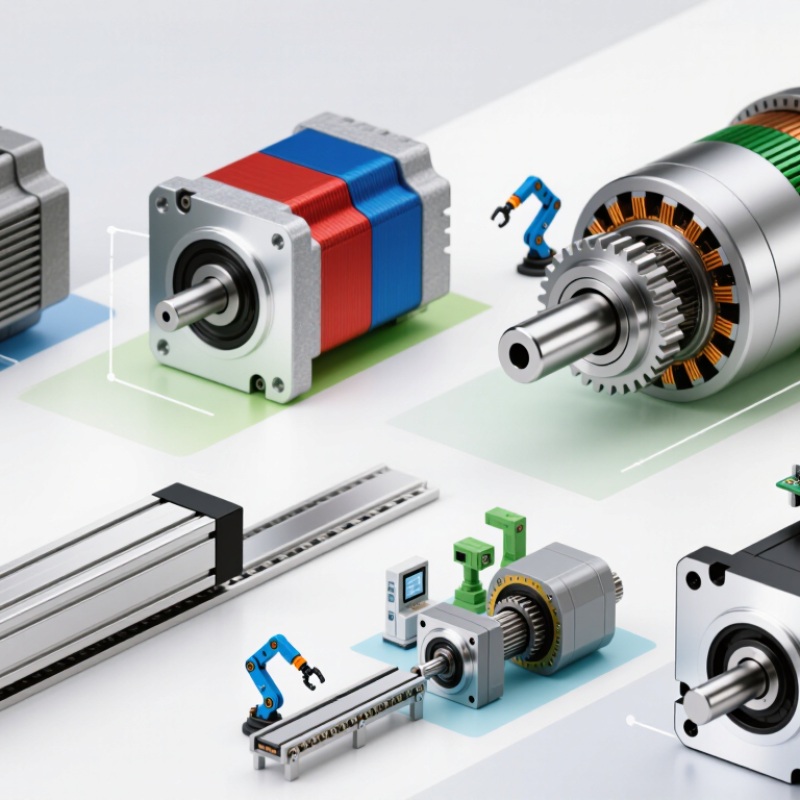
In 2026, buyers will mainly encounter three electric stepper motor types: permanent magnet, variable reluctance, and hybrid. Permanent-magnet motors use a magnetic rotor and offer useful torque at low speeds. They can suit compact positioning tasks, such as adjusting a small valve or camera mount. Variable-reluctance motors have a toothed iron rotor and no permanent magnets. Their simple construction can help in cost-sensitive equipment, though torque may be lower. Hybrid motors combine magnetic and toothed designs. They often provide finer steps and stronger holding torque for printers, lab stages, and automated fixtures.
The application matters more than the label. A hybrid motor may seem like the obvious upgrade, but it can add cost and require careful current and heat management. Permanent-magnet models may be adequate for lighter loads. Variable-reluctance designs can work well when simplicity is valued. None is automatically best. A motor that holds a stationary load may still lose position if the mechanism binds or acceleration is too high. That detail is easy to overlook.
Tips: Check required torque, speed, step angle, supply voltage, and available space before comparing models. Test the motor with the actual load, not just an unloaded shaft. Listen for resonance, and measure temperature during a realistic duty cycle. Leave some margin. Real machines rarely behave exactly like a tidy specification sheet.
How Stepper Motor Designs Differ in Performance and Control
Electric stepper motors differ less by their names than by how they trade torque, speed, and control. A permanent-magnet design offers useful low-speed torque, while a variable-reluctance type can move quickly but typically has less holding torque. Hybrid steppers combine both principles and are common where precise positioning matters. The U.S. Department of Energy’s motor-systems sourcebook notes that electric motor systems account for a large share of industrial electricity use, making heat and drive losses practical concerns—not just details on a specification sheet.
Control changes the result. Full-step operation is simple, but motion can feel rough and produce vibration. Half-step and microstepping divide movement into smaller commanded increments; they can smooth a camera slider or a small feeder, though microstep resolution does not guarantee equal positioning accuracy under load. Chopper current control helps maintain torque as speed rises, while encoder feedback can detect missed motion. That added feedback costs more and complicates setup. A useful comparison should therefore include torque at operating speed, driver current, load inertia, and temperature rise. A motor that looks precise on paper may still stall when a real mechanism accelerates. I would treat catalog torque as a starting point, not a promise.
Key Factors Buyers Should Compare Before Choosing a Motor
Choosing an electric stepper motor in 2026 requires more than comparing holding torque. Buyers should match the motor type to the machine’s real workload. Hybrid stepper motors offer precise positioning and strong torque, while permanent-magnet types suit lighter, simpler mechanisms. Variable-reluctance designs can reduce weight, but they may provide less holding force. The right choice depends on movement, load, and control requirements.
Check torque across the operating speed, not only at zero speed. A motor lifting a 4-kilogram platform may stall during acceleration, even when its rated torque looks sufficient. Review the current rating, voltage range, step angle, and thermal limits. Smaller frames save space, but compact motors can become hot inside enclosed equipment. Measure the mounting face, shaft length, and connector position before ordering.
Noise also matters in offices, laboratories, and inspection machines. Microstepping can make motion smoother, though it does not always improve absolute accuracy. Compare encoder feedback if missed steps would damage materials or interrupt production. My own selection checklist is not flawless. I once focused too heavily on torque and overlooked heat buildup near a sealed gearbox. That mistake changed how I review motors. Ask for verified test data, duty-cycle results, and service guidance. A cautious trial run under the actual load can reveal vibration, resonance, or lost steps that a datasheet may not show.
2026 Top Electric Stepper Motor Types for Buyers
Key factors buyers should compare before choosing a motor
The chart uses a typical engineering comparison scale from 1 to 5, based on commonly specified characteristics of each motor type. Higher scores indicate stronger typical performance for torque capability, positioning accuracy, efficiency, and suitability for demanding motion applications. Actual performance depends on frame size, drive settings, load, speed, and cooling.
Best Stepper Motor Types for Common Industrial Applications
2026 Top Electric Stepper Motor Types for Buyers
Best Stepper Motor Types for Common Industrial Applications
Hybrid stepper motors combine permanent magnets with toothed rotor and stator structures. They suit packaging lines, CNC positioning, and laboratory instruments that need repeatable movement. A hybrid motor can hold a load firmly when stopped, but it may lose steps if acceleration or load exceeds its limits. Test the real mechanism, not just the motor on a bench.
Permanent-magnet steppers offer simpler construction and can work well in compact feeders, valves, and small adjustment assemblies. Variable-reluctance types have no permanent-magnet rotor and may fit applications prioritizing low rotor inertia. Their holding torque can be lower, so check whether a brake or counterbalance is needed. Linear stepper motors move a carriage directly, which can simplify short-stroke positioning, though alignment and guide friction matter.
Tips: Match torque to the load, speed, and acceleration together. Check driver current, supply voltage, and heat during a full-duty test. Leave a margin. Real machines vibrate, and my first sizing estimate is not always right.