






Understanding stepper motors: key aspects and practical considerations
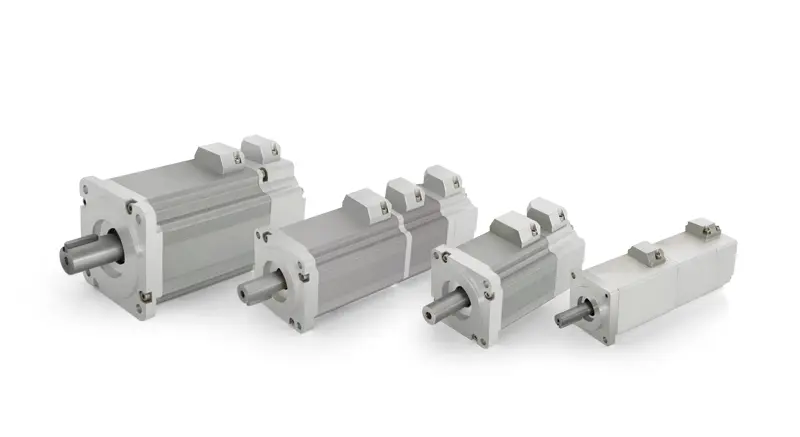
Stepper Motors are an essential component in various industrial and automation applications, known for their precision positioning and torque output. However, like any other motor, they come with their own set of challenges and considerations. In this blog post, we will explore some key aspects of stepper motors, including their heating issues, precision, control methods, wiring, and more.
Heating in Stepper Motors
1. Why Do Stepper Motors Heat Up?
Stepper motors, like other motors, have iron cores and wound coils inside. The coils have resistance, and when electricity flows through them, it produces losses proportional to the resistance and the square of the current. This is known as copper loss. Additionally, if the current is not pure DC or a sine wave, harmonic losses also occur. The iron core, due to hysteresis and eddy current effects, produces losses in an alternating magnetic field, called iron loss. Both copper loss and iron loss manifest as heat, affecting the motor's efficiency. Stepper motors generally prioritize positioning accuracy and torque output, often operating at lower efficiencies with high currents and harmonic components, leading to significant heating.
2. Why Do High/Low-Temperature and Servo Motors Heat Up More?
High/low-temperature motors use coil materials that can withstand higher temperatures and have higher insulation strengths. Consequently, their heat dissipation performance is slightly worse than standard servo motors' coils, but this does not compromise their high-temperature performance.
3. Heating Variation with Speed:
When using constant-current drive technology, stepper motors maintain a constant current at static and low speeds to ensure constant torque output. As speed increases, the internal back EMF rises, causing the current and torque to gradually decrease. Thus, copper loss-related heating is speed-dependent, typically higher at static and low speeds and lower at high speeds. Iron loss changes differently, but the overall heating is the sum of both.
4. Impact of Heating:
While moderate heating usually doesn't affect motor lifespan, excessive heating can cause negative effects, such as structural stress changes due to differing thermal expansion coefficients and slight changes in internal air gaps, impacting dynamic response and increasing the likelihood of out-of-step conditions at high speeds. In some applications, excessive heating is unacceptable, like in medical devices and high-precision testing equipment.
5. Reducing Motor Heating:
Reducing heating involves minimizing copper and iron losses. This can be achieved by selecting motors with lower resistance and rated current, using series-connected motors over parallel when possible. Already selected motors can benefit from drivers with automatic half-current control and de-energization features. Additionally, microstepping drivers reduce heating due to their sinusoidal-like current waveforms with fewer harmonics. Choosing an appropriate drive voltage balance is crucial for high speed, smoothness, heating, and noise.
Precision of Stepper Motors
The KH and KVM series of two-phase hybrid stepper motors have a step angle of 1.8° with a precision of 3-5% of this angle. This error does not accumulate and occurs only upon initial power-up.
PLC Control of Stepper Motors
Delta and Mitsubishi PLCs use the DPLSR/PLSR instructions for pulsed control of stepper and servo motors, incorporating acceleration and deceleration with a time greater than 100ms. The DPLSY/PLSY instructions, lacking acceleration/deceleration, can cause high-speed stalling, step loss, or overload alarms.
Wiring and Extension of Stepper Motors
KH stepper motors have a standard cable length of 3 meters, while KVM motors have a 1-meter cable. Cables can be extended up to 15 meters, beyond which current reduction and torque attenuation occur.
Choosing Microstepping Divisions
We recommend selecting 4000 or 10000 microstepping divisions. Higher divisions offer better torque at high speeds and reduce vibration at low speeds. The choice is also constrained by the PLC's maximum pulse frequency.
Pulse and Direction Signal Resistors
Whether resistors are needed depends on the driver's pulse and direction port voltage. If the port supports 24V, external resistors are unnecessary when using a 24V power supply. For 5V ports with a 24V supply, 2K resistors are required.
ENA+/ENA- (or MF+/MF-) Terminal Wiring
ENA+/ENA- (or MF+/MF-) terminals release the motor by cutting off phase current when an active signal is provided, freeing the motor shaft.
Half-Current Feature
The half-current feature reduces motor heating by halving the current when no pulses are received for a period (e.g., 1.5s). It's recommended for horizontal applications to reduce heating and disabled for vertical applications to maintain holding torque.
Choosing Driver Operating Voltage
Higher operating voltages reduce torque attenuation at high speeds within the driver's voltage range, but increase heating and vibration.
Setting Driver Output Current
Typically, set the driver's output current to no more than the motor's phase current, except when slightly exceeding it to meet torque requirements or for cold environments to enhance torque output.
Reversing Motor Rotation
To reverse motor rotation without altering the control program, swap the A+/A- (or B+/B-) leads with the driver connections. For three-phase motors, swap any two phases.
By understanding these aspects, you can better select, control, and maintain stepper motors in your applications, ensuring optimal performance and reliability.
