Top Servo Motor Applications and Benefits for Modern Industries?
In today's rapidly evolving industrial landscape, the role of the Servo Motor is pivotal. According to Dr. Emily Johnson, a leading expert in automation technology, "Servo Motors are the backbone of precision in modern machinery." This statement underscores their importance across various sectors.
Servo Motors provide unmatched control and efficiency. They enable high precision in applications ranging from robotics to CNC machines. However, not every industry fully utilizes their potential. A lack of awareness leads to missed opportunities for significant improvements in productivity.
Despite their numerous advantages, challenges remain. Technical complexity and initial costs can be barriers for some businesses. Industries must reflect on these aspects to fully embrace Servo Motor technology. The journey toward enhanced efficiency starts with understanding both the benefits and the hurdles.
Applications of Servo Motors in Industrial Automation
Servo motors are transforming industrial automation. Their precise control and high efficiency make them essential for modern manufacturing. According to a recent market report, the global servo motor market is expected to reach $5 billion by 2025. This growth indicates a significant shift in how industries approach automation.
In robotics, servo motors enable accurate movements. They are widely used in robotic arms for tasks like assembly and welding. Reports show that robotic applications account for over 30% of servo motor usage. This showcases the motors' reliability and performance under demanding conditions. However, challenges remain. High initial costs can deter adoption, especially for small businesses.
In packaging lines, servo motors optimize speed and accuracy. They allow quick adjustments, reducing downtime. The demand for faster production is increasing, with 70% of companies seeking automation improvements. Yet, integrating new systems can be complex and requires skilled personnel. Many firms face a skill gap, which can slow progress. Balancing between innovation and practical limitations remains a critical task for the industry.
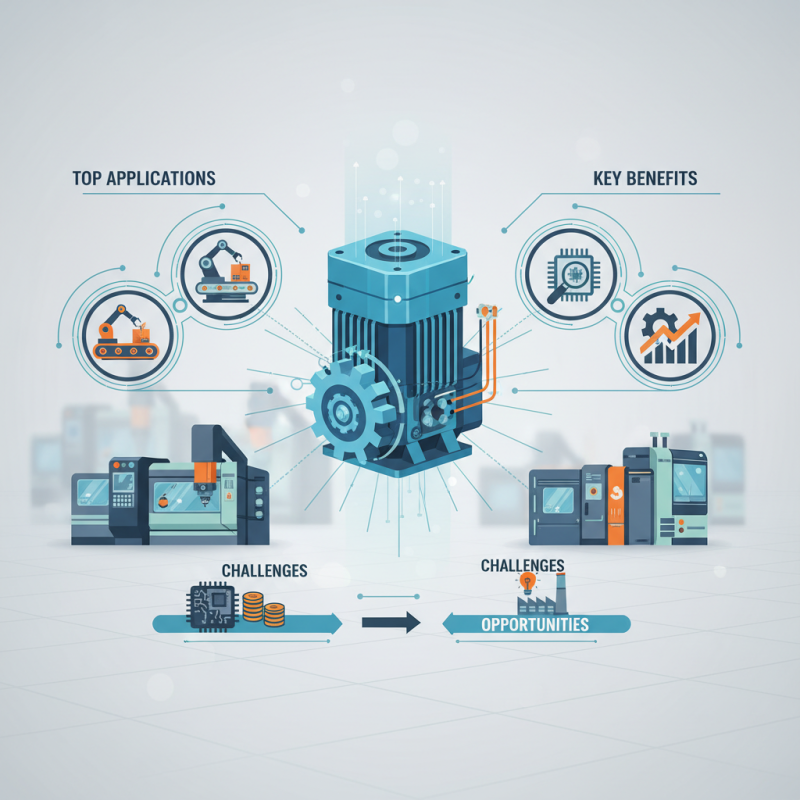
Top Servo Motor Applications in Industrial Automation
Benefits of Servo Motors for Precision Control in Manufacturing
Servo motors are crucial for precision control in manufacturing. They offer high accuracy, making them ideal for tasks that require tight tolerances. These motors can make micro-adjustments, ensuring every movement is precise. This capability is vital for industries like robotics and CNC machining. In these fields, even a small error can lead to significant issues.
Another advantage of servo motors is their responsiveness. They can quickly adjust speed and position based on feedback. This adaptability helps maintain consistent quality in production. However, their complexity can be a downside.
Setting up and tuning servo systems requires specialized knowledge. If not done correctly, performance may suffer.
Energy efficiency is another benefit. Servo motors consume less power compared to other types. This translates to lower operational costs. Yet, they can be expensive to install initially. Industries must weigh these costs against potential savings. A careful analysis is necessary to determine if the investment is worthwhile.
Role of Servo Motors in Robotics and Automation Systems
Servo motors play a crucial role in robotics and automation systems. These motors provide precise control of angular position. They excel in tasks requiring accuracy and speed. In robotic arms, servo motors enable smooth and accurate movements. This precision is essential in industries like manufacturing and healthcare. Every millimeter matters when assembling delicate components.
Automation systems rely heavily on servo motors for efficiency. They allow for rapid adjustments in production lines. A small change in motor speed can enhance productivity. However, the complexity of integrating these motors can pose challenges. Not all applications will benefit equally from servo technology. Some systems may require trial and error to find the right fit.
While servo motors offer numerous advantages, they are not without their drawbacks. The initial investment can be significant. Maintenance can also be demanding, requiring skilled personnel. Automation solutions must be tailored to specific needs. An inappropriate application may lead to wasted resources. Careful consideration is key to successful implementation in modern industries.
Top Servo Motor Applications and Benefits for Modern Industries
| Application |
Industry |
Benefits |
| Robotics |
Manufacturing |
High precision and efficiency in motion control. |
| CNC Machines |
Production |
Enhanced accuracy and repeatability in machining processes. |
| 3D Printing |
Additive Manufacturing |
Improved print quality and faster production times. |
| Material Handling |
Logistics |
Increased speed and reliability in automated systems. |
| Camera Gimbals |
Entertainment and Media |
Stabilization and smooth operation for high-quality footage. |
| Textile Machines |
Textile Industry |
Precision control for pattern and fabric production. |
Impact of Servo Motors on Energy Efficiency in Modern Industries
Servo motors are revolutionizing energy efficiency in modern industries. Their precise control leads to reduced energy consumption. This technology allows machines to operate only as needed, minimizing waste. Many production lines are adopting these motors to optimize their operations.
Consider a manufacturing plant. With conventional motors, energy usage can spike during idle times. Servo motors, on the other hand, can dramatically lower power draw. This not only cuts costs but also reduces environmental impact. However, there may be installation challenges. Transitioning from traditional systems to servo-driven ones requires careful planning and adjustments.
In industries like robotics and automation, efficiency is paramount. Servo motors can maintain high performance with low energy use. However, the long-term benefits aren't always immediately apparent. Companies must assess their energy efficiency goals and the return on investment with new technologies. Careful evaluation is essential before making changes.
Future Trends in Servo Motor Technology and Applications
The evolution of servo motor technology is reshaping modern industries. These motors are becoming increasingly precise and efficient. Many sectors, like robotics and automation, now rely on advanced servo systems for tasks that require high accuracy. Smart factories utilize these technologies to enhance productivity and reduce errors.
Future trends indicate a shift toward integrating artificial intelligence with servo motors. This combination can lead to real-time adjustments, improving performance. Moreover, the rise of IoT devices means servo motors will operate through connected systems. Industry stakeholders must consider these changes for continuous improvement.
However, challenges remain in adapting to these advancements. Training for personnel is essential to harness new features. Not every facility is equipped to upgrade existing systems. This disparity can cause setbacks. The transition requires careful planning and commitment to overcome the hurdles.