How to Conduct a Vehicle Seats Test for Safety and Comfort?
Conducting a Vehicle Seats Test is essential for ensuring safety and comfort in automotive design. Proper testing helps manufacturers understand how well seats perform during a crash and in daily use. Each vehicle seat must support the driver and passengers effectively.
In a vehicle, the seat influences posture, comfort, and overall driving experience. Many overlook how a seat’s design impacts safety. Some may find their seats inadequate after extended use. A Vehicle Seats Test highlights these issues, revealing areas needing improvement.
Detailing the testing procedure can uncover hidden flaws. For example, inadequate support may lead to discomfort on long trips. Evaluating different materials can also affect heat retention and comfort levels. The outcome of such tests is not always perfect. However, they provide valuable insights to refine seat designs.
Understanding the Importance of Vehicle Seat Testing for Safety and Comfort
Vehicle seat testing plays a crucial role in ensuring safety and comfort for all passengers. Drivers and passengers spend a significant amount of time sitting in their vehicles. Properly designed seats can greatly influence the overall driving experience. They help reduce fatigue during long journeys. Additionally, well-tested seats can prevent injuries during accidents.
Understanding the components of a good seat is essential. Factors like cushioning, lumbar support, and seat positioning matter greatly. Poorly designed seats can lead to discomfort. This discomfort can distract drivers, increasing the risk of accidents. Checking materials for durability and ease of cleaning is often overlooked.
Testing should also assess the ease of access. Can people with limited mobility get in and out easily? Availing flexible adjustment options is crucial. After all, a seat's design must cater to people of all sizes and shapes. Regular assessments can identify areas that need improvement. Thoughtful design should always prompt reflection on how it impacts safety and comfort.
How to Conduct a Vehicle Seats Test for Safety and Comfort
| Test Dimension |
Description |
Measurement Method |
Standard Compliance |
Recommended Value |
| Seat Cushion Comfort |
Assessing the softness and support of the seat cushion |
User feedback and pressure distribution mapping |
ISO 16870 |
Minimum 15 kPa pressure |
| Safety Harness Integrity |
Testing the strength and durability of seat belts |
Tensile testing up to failure |
FMVSS 208 |
Pass at 1500 N load |
| Lumbar Support Adjustability |
Evaluating the range and effectiveness of lumbar support |
User trials and adjustment mechanism testing |
ISO 5980 |
Range of 30 mm adjustment |
| Seat Height Adjustability |
Checking the height range for driver visibility and comfort |
Measuring height from floor to seat base |
FMVSS 202 |
Minimum height of 420 mm |
| Crash Test Performance |
Evaluating seat performance in crash scenarios |
Full vehicle crash simulations |
SAE J2261 |
Must withstand impact without failure |
Factors to Consider When Evaluating Vehicle Seat Safety and Comfort
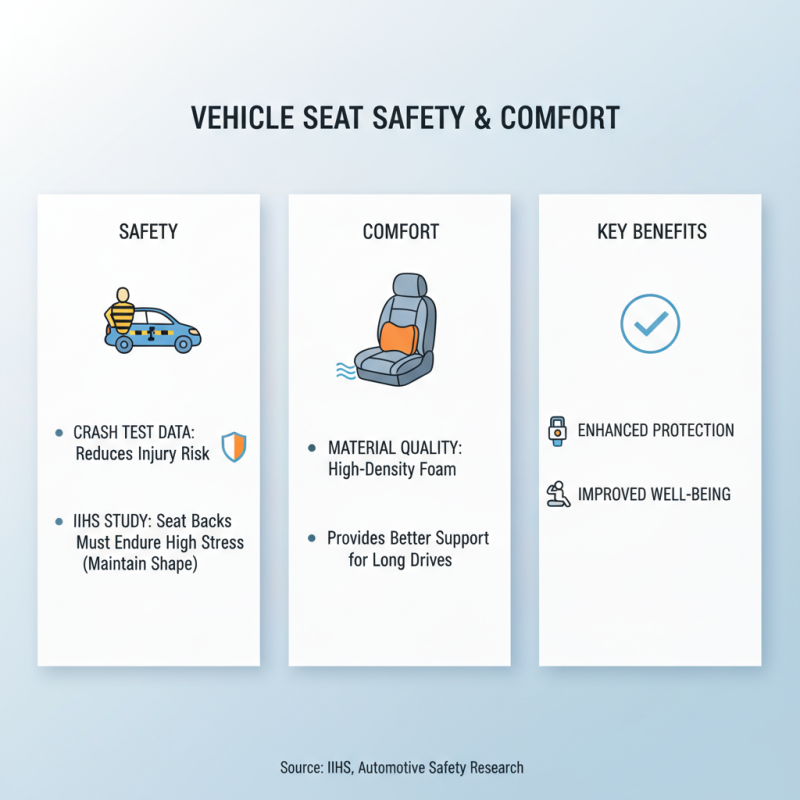
When evaluating vehicle seat safety and comfort, several critical factors come into play. For instance, crash test data shows that proper seat design can significantly reduce injury risk. A study by the Insurance Institute for Highway Safety (IIHS) revealed that seat backs must endure high stress. This ensures they retain their shape during a collision. Considerations like material quality also matter. High-density foam provides better support, enhancing comfort on long drives.
Another aspect involves adjustability features. Seats should accommodate various body types. A National Highway Traffic Safety Administration (NHTSA) report highlights that seats with adjustable lumbar support can decrease back pain complaints by up to 30%. Additionally, the angle and height of the seat affect visibility. Drivers need to see the road without strain. Surprisingly, many vehicles overlook this basic requirement.
Ventilation is also a factor. Hot weather can affect comfort levels while driving. Research suggests that well-ventilated seats improve overall driving experience. Yet, not all manufacturers prioritize this. Some designs still trap heat, leading to discomfort during long trips. It's vital to consider these factors holistically to ensure that seat systems are, indeed, safe and comfortable.
Step-by-Step Process for Conducting a Vehicle Seat Safety Test
Conducting a vehicle seat safety test is crucial for ensuring comfort and safety. It involves a series of careful steps. Begin by checking the seat’s structure. Look for any visible wear or damage. Sit in the seat to assess cushioning and support. Ensure it provides proper lumbar support. This is essential for long drives.
Pay attention to seat adjustment mechanisms. Test the ease of moving the seat forward and backward. Make sure it locks securely in place. A seat that shifts during driving can be dangerous. Comfort plays a vital role. Spend some time seated in different positions to find the most comfortable setup for various body types.
Tips: Always check the seat belts as well. They should retract smoothly and latch securely. Test the seat’s alignment with the steering wheel. Good visibility and accessibility are key for safe driving. Consider the materials used. They should be durable yet comfortable. A balance of aesthetics and functionality is important. Avoid seats that look great but lack essential features.
Vehicle Seats Safety and Comfort Test Results
Methods for Assessing Comfort in Vehicle Seat Designs
When assessing comfort in vehicle seat designs, it's crucial to consider various methods. One effective approach is through user feedback. Conducting surveys can reveal how different individuals perceive comfort. Many users may prefer softer materials, while others seek firmer support. This variability shows that preferences differ greatly. Testing different materials in real-world scenarios can present insights into durability and comfort.
Tips: Try to involve a diverse group of testers. People of different shapes and sizes will have unique experiences. Collecting data from various demographics can enhance your findings.
Another method to assess comfort involves ergonomic testing. Utilize advanced tools to measure support and pressure distribution. These assessments show how weight is distributed across the seat. Too much pressure on certain areas can be uncomfortable over time. Conducting long-term tests may reveal more about how designs perform.
Tips: Observe testers during long drives. Look for signs of discomfort, like shifting positions or fidgeting. Note their feedback carefully and discuss possible adjustments later. Such reflections can help refine seat designs significantly.
Analyzing Test Results and Improving Vehicle Seat Performance
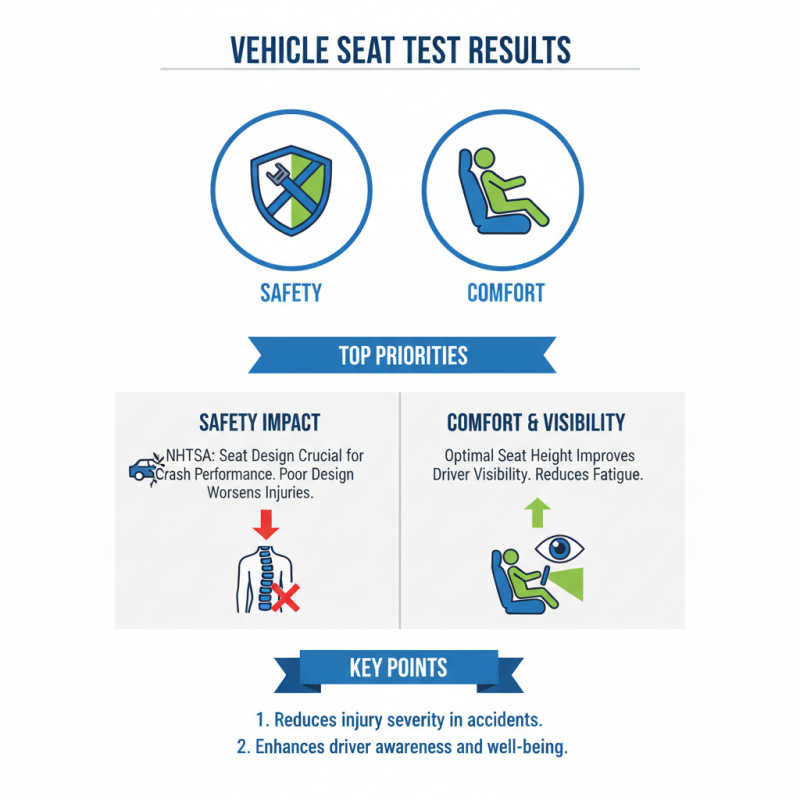
When analyzing vehicle seat test results, safety and comfort top the priority list. According to the National Highway Traffic Safety Administration, seat design significantly impacts crash performance. A poorly designed seat can exacerbate injuries during an accident. Recent studies reveal that optimal seat height enhances driver visibility.
Improving seat performance often involves scrutinizing test findings. Body pressure mapping tools measure comfort levels, helping engineers design better seats. Data shows that adjustable lumbar support can prevent long-term back pain. However, not all designs meet this need effectively. Feedback from test participants can reveal shortcomings in comfort.
Tips: Consider incorporating adjustable features. User input is vital for improvement. Regularly update testing methods to keep up with technology. Collecting diverse data can uncover hidden issues in seat design. Each test should aim for continuous enhancement, acknowledging that perfection is unattainable.