Why Choose a Vacuum Servo Motor for Your Automation Needs?
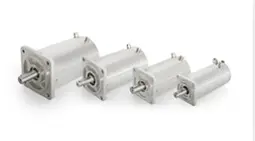
In today's fast-paced industrial world, efficiency and precision are paramount. The Vacuum Servo Motor stands out as a key technology in automation. These motors offer unique advantages in various applications, making them increasingly popular.
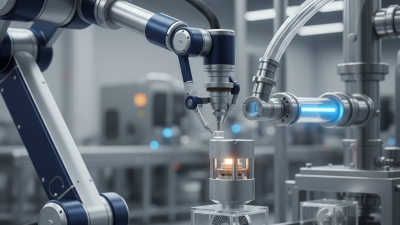
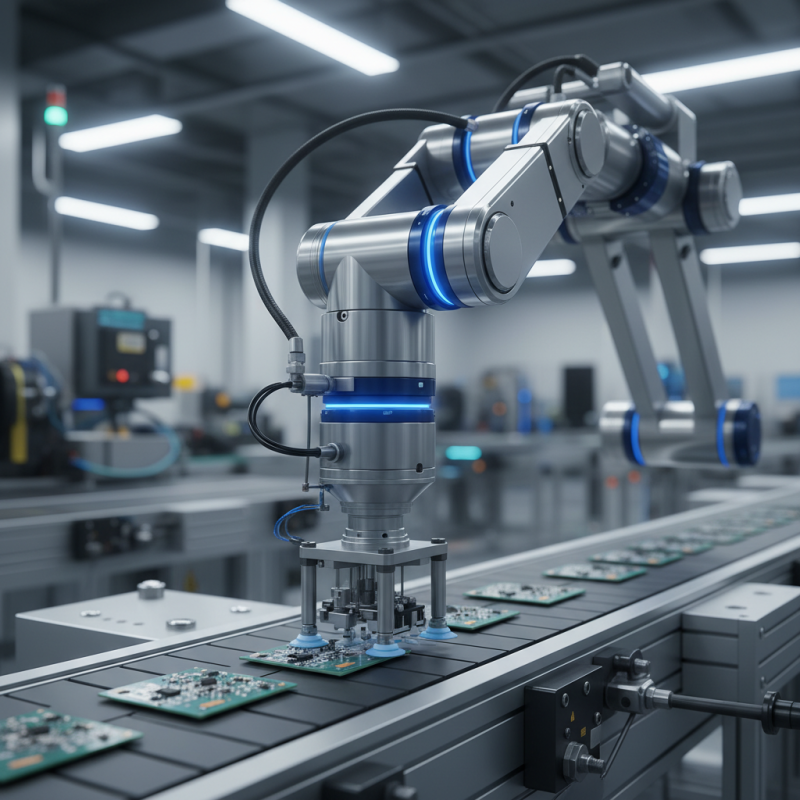
Vacuum Servo Motors provide exceptional control and responsiveness. They excel in environments where high reliability is crucial. Imagine a robotic arm swiftly moving components in an assembly line, showcasing the motor's precision. This level of accuracy ensures minimal errors and maximizes productivity.
However, not every project requires a Vacuum Servo Motor. Factors such as cost and specific application needs must be considered. Sometimes, traditional motors may suffice. Evaluating the right technology is important. Incorporating a Vacuum Servo Motor can bring transformative benefits but should align with operational goals. Ultimately, the decision should reflect a careful balance of needs and capabilities.
Benefits of Vacuum Servo Motors in Industrial Automation Systems
Vacuum servo motors have become a vital component in industrial automation systems. Their efficiency in handling high loads is unmatched. According to a recent report by Grand View Research, the global industrial automation market is expected to grow significantly, reaching over $300 billion by 2025. This enhancement highlights the growing reliance on advanced motor technologies.
One notable benefit of vacuum servo motors is their precision. These motors excel in applications that require accurate positioning and speed control. They help reduce cycle times, which can drive productivity improvements. Notably, a study from the International Journal of Advanced Manufacturing Technology suggests that using these motors can improve operational efficiency by 20% or more. This improvement is crucial for manufacturers aiming to stay competitive.
Tip: Regular maintenance checks can enhance the lifespan of vacuum servo motors. Ensure that the vacuum supply remains consistent to avoid operational hiccups. Addressing minor issues can prevent costly downtimes later.
However, not all applications benefit equally. Some environments may introduce dust or contaminants. Vacuum motors may struggle in such conditions, affecting performance. It's important to consider the specific operational settings before implementation.
Tip: Conduct a thorough risk assessment before selecting vacuum servo motors. It helps in identifying potential issues in advance and formulating a clear strategy.
Key Performance Metrics of Vacuum Servo Motors Compared to Traditional Motors
When considering automation solutions, vacuum servo motors present compelling advantages. These motors offer more precise control than traditional counterparts. For example, they can maintain a consistent vacuum pressure, essential for tasks like material handling. This precision leads to improved efficiency in production lines.
In terms of performance metrics, vacuum servo motors excel in response time. They can achieve rapid acceleration and deceleration. This is crucial in fast-paced environments where delays can hurt productivity. The energy efficiency of these motors is another advantage. They consume less power while delivering high torque levels. However, integrating these systems can be challenging.
Some users find that the initial setup requires more expertise. Even with clear guidelines, mistakes can occur. This means training is necessary. Maintenance also differs from traditional motors. Users must adapt to new procedures. Ultimately, while vacuum servo motors offer significant benefits, they may not be the perfect fit for every application. Understanding your specific needs is essential.
Energy Efficiency: The Cost-Effectiveness of Vacuum Servo Motors
Vacuum servo motors offer remarkable energy efficiency, making them a smart choice for automation. They consume less power compared to traditional motors, which reduces operational costs. This efficiency is particularly beneficial in continuous operations, where savings can add up over time. A well-designed vacuum servo system can convert energy into motion more effectively, reducing wasted energy.
Consider the practical impact: an assembly line running multiple machines can incur high energy costs. By switching to vacuum servo motors, companies can achieve significant savings without sacrificing performance. Smaller, compact designs also contribute to space efficiency. However, there can be a learning curve when integrating these systems. Employees may need time to adapt to the new technology and understand maintenance requirements.
This transition may pose challenges. Not all operations will see immediate benefits, and initial investments can be daunting. Companies should evaluate their unique environments. Awareness of potential issues can help in making informed decisions. The long-term benefits, though, often outweigh these initial hurdles. Finding the right fit for your specific automation needs is essential for maximizing efficiency.
Applications of Vacuum Servo Motors in Robotics and Manufacturing Equipment
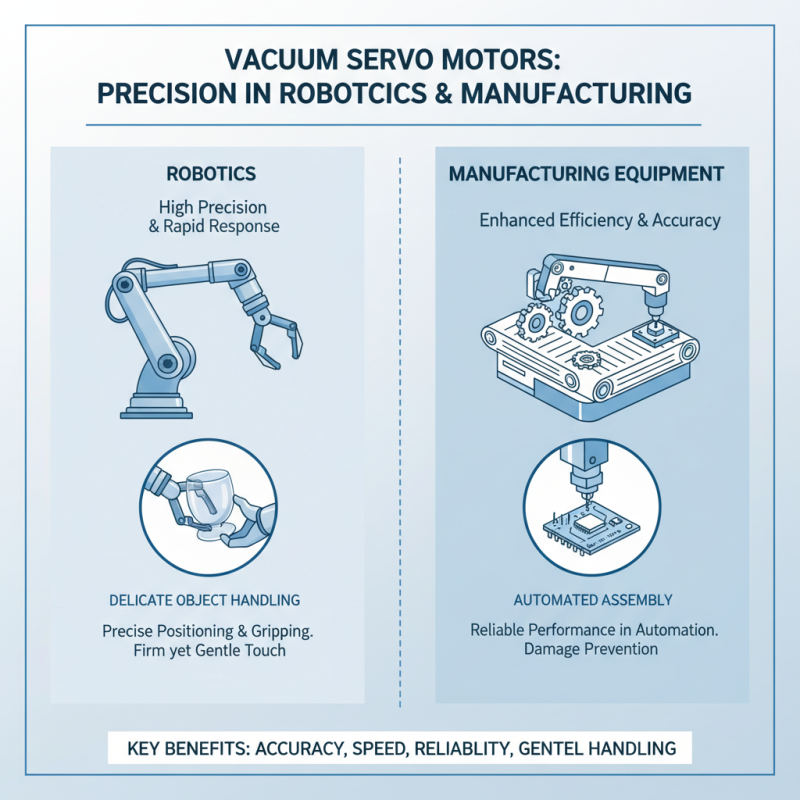
Vacuum servo motors play a vital role in robotics and manufacturing equipment. They provide high precision and rapid response times. In robotics, these motors make tasks like positioning and gripping much easier. For example, when a robotic arm picks up delicate objects, accuracy is crucial. Vacuum servo motors ensure the grip is firm yet gentle, preventing damage.
In manufacturing, the use of vacuum servo motors enhances efficiency. They streamline assembly processes and fine-tune movements. A production line benefits from the smooth operation of these motors. However, challenges can arise. For instance, if a motor malfunctions, the entire system may halt. This downtime can be costly and inconvenient. Proper maintenance and regular checks are essential to avoid such setbacks.
While vacuum servo motors offer significant advantages, they are not without their drawbacks. Not every application is suitable for them. In certain environments, alternative technologies might be more effective. It's essential to evaluate the specific requirements of your automation needs. Balancing performance with practicality is key.
Market Trends: Adoption and Growth of Vacuum Servo Motor Technologies
The market for vacuum servo motor technologies is rapidly evolving. Industries recognize their efficiency and precision in automation. With the growth of smart factories, these motors are gaining traction. Companies are increasingly adopting vacuum technologies for better control in manufacturing processes.
There are notable trends driving this adoption. The push for sustainability highlights the benefits of using vacuum systems. They often consume less energy than traditional motors. However, there are challenges. Initial setup costs can be high. Also, integrating vacuum servo motors with existing systems may require significant adjustments.
As businesses strive for automation, not all solutions fit seamlessly. Some companies struggle with training staff on new technologies. Additionally, the reliability of vacuum technologies in demanding environments is still a concern for many. Adopting these motors demands careful consideration and evaluation.