


Biobank

In order to fully apply the results of basic medical research to the diagnosis and treatment of clinical diseases, the concepts of translational medicine and precision medicine have gradually emerged in recent years. As a promising bridge across this divide, biobanks have sprung up all over the country. The lower the temperature at which a sample is stored, the closer it will be to its state when removed from the body. For short-term storage, an automated storage system at -20 ℃ can be selected, but for strategically collected samples, an automated storage system at -80℃ or -196℃ is generally used due to the longer storage time.
An automated storage system for biological samples generally includes three basic working modules: sample reception (or output), sample transportation, and sample storage (or retrieval). The hardware consists of a receiving area, an automated transport mechanism (robotic arm or multi-degree-of-freedom linear motion module), and a low-temperature storage area (refrigerator or liquid ammonia tank), all of which receive instructions from the sample management software.
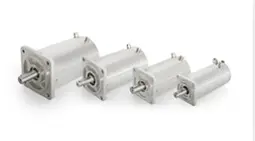
Kingsni KVM series cryo-temperature stepper motors and KLS series cryo-temperature linear motion stage can be used for automatic storage and retrieval of sample kits in -196℃ vapor-phase liquid ammonia environment freezers.
The automatic opening mechanism of the liquid ammonia tank opening for storing biological samples can reach temperatures as low as -60°C around the opening during liquid ammonia refilling. The opening mechanism, driven by the KECM cryo-temperature servo motor and PB cryo-temperature gearbox, can open and close normally at low temperatures.